Ari Ehrlich

Fossil fuels won’t fix a fossil fuel crisis

Nicolette Boele

Today, these missed opportunities are doing more damage than ever. The biggest fossil fuel crisis in history has pushed us into a new reality, with the head of the International Energy Agency declaring the imminent death of the fossil fuel era: “The damage is done … This will have permanent consequences for the global energy markets for years to come.”

 https://www.thesaturdaypaper.com.au/share/a72b6f56-e28c-41d3-a446-a6f272e64179/TRFJ6xr

Share

Takayna/Tarkine Rainforest Update

While a mining company’s scrapping of plans for a tailings dam in Tasmania’s Takayna rainforest is welcome, its revised site reflects how little the environment minister cares. By Bob Brown.

“MMG was flagging the withdrawal of its contentious plan to dump its acid wastes in the Takayna/Tarkine rainforest at McKimmie Creek. That project involved constructing a pipeline from Rosebery, north over the Pieman River into Takayna – discounting the values of the rainforest and its wildlife to zero.

Read more: https://www.thesaturdaypaper.com.au/share/22750/VkQBExYS

Also, a reminder of the March for Forests in March event, Lismore, Sunday 22nd of March.

March in March for Forestshttps://marchforforests.org  read more

Share

Why the world may be nearing its limits

From The Nimbin Good Times, by Mark Pestell.

In 1972, a group of researchers from the Massachusetts Institute of Technology (MIT), one of the top five Universities in the USA, published a groundbreaking report that would shape the global environmental debate for decades to come. Entitled ‘The Limits to Growth’, commissioned by the Club of Rome (clubofrome.org), the report presented a sobering possibility: if humanity continued to pursue unlimited economic and population growth on a planet with finite resources, global systems could begin to collapse around the year 2040.

http://www.nimbingoodtimes.com/archive/pages2025/nov/NGT-1125-8-15.pdf

by Mark Pestell November 2025 page 14

Share

Microbes found in bark enhance benefits of trees

From the Byron Echo Volume 40#32 January 14


Australian researchers have discovered a hidden climate superpower of trees. Their bark harbours trillions of microbes that help scrub the air of greenhouse and toxic gases. It’s long been known that trees fight global warming by consuming carbon dioxide (CO2) through photosynthesis. But a new study published in Science shows their microbial partners take up vast amounts of other climate-active gases too. The study, conducted primarily by Dr Bob Leung at Monash University’s Biomedicine Discovery Institute (BDI), and Dr Luke Jeffrey at Southern Cross University’s Faculty of Science and Engineering, rewrites our understanding of how trees and their resident microbes shape the atmosphere. For more information, contact the Media Office at Southern Cross University at scumedia@scu.edu.au read more

Share

Great Koala National Park

Open letter to Premier Minns and the NSW Government
January 10, 2025.

IT IS PAST TIME FOR THE MINNS GOVERNMENT TO STOP LOGGING THE GREAT KOALA NATIONAL PARK. THEY MUST HONOUR THEIR COMMITMENT TO PROTECT IT.

The Minns’ Government was elected on a promise to save Koalas and create the Great Koala National Park, but instead they have increased logging, 21 months later they have logged 7,185 hectares of the park, 8.4% of its loggable area, and refuse to stop. This likely encompasses the homes of over 500 Koalas, along with another 37 Threatened Species.

In January 2015 the NSW ALP opposition leader Luke Foley first promised, if elected, to create the 315,000 hectare Great Koala National Park (GKNP), incorporating 175,000 ha of State Forests and 140,000 ha of existing reserves. This commitment was also taken to the 2019 election.
read more

Share

Fridays4Forests

Today at the second weekly Fridays4Forests session, opposite the Murwillumbah post office, three members of the CEC, collected a good number of signed petitions to the premier and local federal member, to stop logging native forests.

Share

Great Koala National park

Why We Need a Great Koala National Park.

The countdown is on, the assessments are complete or nearly so, and a decision on the GKNP will be made this year – though might not be announced until next year. So we need a concerted lobbying effort over the next month to maximise the outcome for the GKNP. If we get a good outcome for it we have more chance of stopping all logging of public native forests early next year.

 https://assets.nationbuilder.com/ncec/pages/19/attachments/original/1731279148/Why_we_need_a_Great_Koala_National_Park.pdf?1731279148.

Share

The Windfarm Threat to The Great Dividing Range

The Great Dividing Range

is a magnificent series of connected mountain ranges that form the backbone of eastern Australia. Stretching over 3,500 kilometres from the tropical north to the temperate south, this ancient landscape is home to some of the most ecologically significant habitats on Earth. Sadly, this natural wonder is facing severe threats from major alternative energy developments. Already, deforestation, urban expansion, and unsustainable resource extraction are affecting the integrity of this vital ecosystem..

All ridges will be contoured for access roads and pads to install wind turbines.

Impact on Native Vegetation

The proposed renewable energy projects, particularly wind farms, in Queensland, pose a significant threat to the state’s high-quality, intact native vegetation. This presentation highlights the critical conservation values of these areas and the heavy price being paid in terms of the degradation of ecologically important ranges. read more

Share

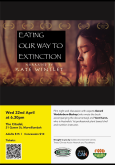
CEC Movie Club: The Forest

The story of an ecologist with a plan to save the world by restoring the planet’s forests. His original work was hijacked by corporations and politicians with disastrous effect. Now he’s using science to fight back. Includes a segment with Professor David Lindenmayer, author of The Forest Wars, available from the NEW Caldera Environment Center and Shop, next door to the Fresh Wholefoods store. 43/2 Wollumbin St Murwillumbah.

https://iview.abc.net.au/show/forest

Share