Brian

Caldera Report > With Every Cup of Coffee: 25,000 micron-sized and 12 million nano-sized microplastic particles!

Cardboard take away coffee cups are plasticised, because, if not, the cardboard cup would soak and fall apart when filled with liquid.

When the plasticised-cardboard of the take-away coffee cup goes through the temperature change of being filled with the hot liquid, thousands of micro and millions of nano sized plastic molecules fracture and fragment away from the plasticised-cardboard, into your cup of coffee. [Source: (link).]

Mostly the plastic we ingest passes through us, however, we accumulate plastic nano-particles and studies show them throughout our bodies.

The plastic nano molecules we accumulate accumulate primarily in our brains, we don’t know why, however plastic accumulates in our bodies mostly in our brain, Plastic accumulates in the brain at ~10 times higher levels than in the liver or kidneys (91% vs. 4% and 4% of total plastic mass in these organs). [Source: (link).] read more

Share

The Wollumbin Caldera – It’s Geological Formation and Flora

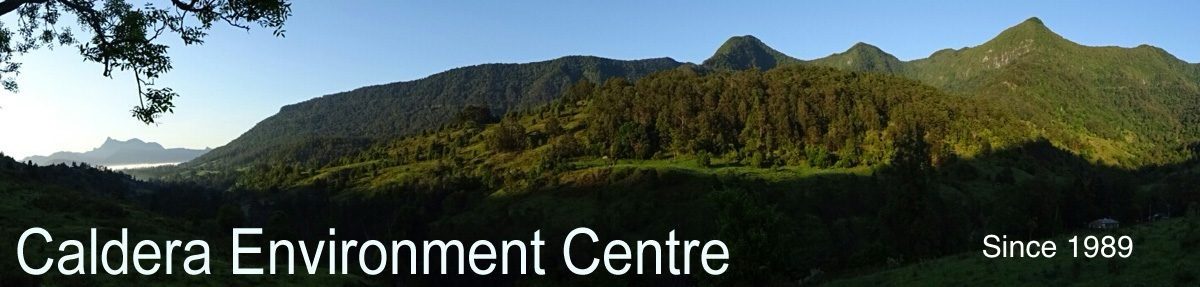
The Wollumbin / Mount Warning shield volcano and its erosion caldera is a unique volcanic landform which has functioned as a refugium, over the 20 million years since it’s formation, for a core area of Gondwana rainforest flora.

The Caldera is located in a major climatic transition zone, between temperate and tropical floral and faunal species, giving high species diversity under a wide range of habitats, its volcanic origins and very high localised rainfall make this a very complex and interesting landform.

20 million years ago the continent, bearing its Gondwanic rainforest flora, was moving north, away from Antarctica. The continent had been passing over one of the earths hotspots, and this had given rise to a chain of volcanic activity down the east coast of the continent, including the volcanic eruption and subsequent laval covering of the landscape which was the formation of the Mount Warning / Wollumbin Shield Volcano. The height and spread of the laval mound of the volcano is estimated at 2km high and a spread which for example extended 30km out onto the continental shelf beyond the current sea level. read more

Share

They are removing the environmental protections from the Environmental Planning and Assessment Act [!] .

Key purposes of the Act until now have been: to ensure that ‘development’ is done in an environmentally sustainable way; to protect the environment; to ensure community participation – they are rewriting it so that they can ignore all of those things.

Example: One of the many changes is a new assessment pathway that is “unconstrained and expressly prohibits consideration of environmental impacts and the public interest.” note the EDO.

The intention behind the changes is to allow development in otherwise environmentally protected areas.

The Act is New South Wales’ primary legislation for land use planning and development assessment. It governs environmental planning instruments like State Environmental Planning Policies (SEPPs) and Local Environmental Plans (LEPs). read more

Share

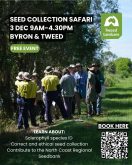
Tweed Landcare UPCOMING EVENT Seed Collection Safari

Join Tweed Landcare and Michelle Chapman for an engaging and informative seed collecting safari bus trip. Contribute to the North Coast Regional Seedbank Project, creating a vital, genetically diverse native seedbank for the entire NSW North Coast region.

Share

The Tweed Valley: “A deep rich valley clothed with magnificent trees, … ” Oxley: 1823

In 1823 John Oxley was the first European to see the Tweed Valley, and he wrote of it: “A deep rich valley clothed with magnificent trees, the beautiful uniformity of which was only interrupted by the turns and windings of the river, which here and there appeared like small lakes. The background was Mt. Warning. The view was altogether beautiful beyond description. The scenery here exceeded anything I have previously seen in Australia.”

Oxley was sailing up the eastern coast of Australia from Sydney in search of a penal settlement site “for difficult convicts”. Sailing further, they decided on Redcliffe, part of now Brisbane (perhaps explaining something of the Queensland culture of today). read more

Share

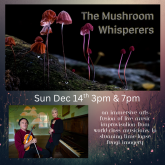
Live at The Citadel: The Mushroom Whisperers is an immersive experience, perfect for the intimacy, acoustics and intention of The Citadel.

Sunday December 14th 3pm & 7pm.

You might have caught Follow the Rain on Netflix;Steve Axford and Catherine Marciniak’s gorgeous stop-motion fungi imagery and documentary, affectionately known as “the Fungi film”.

As a special event for the arts and nature lovers of Murwillumbah, the world-class musicians behind the music to Follow the Rain are coming to perform live at The Citadel. 

Carla (flute & voice) and Romano (violin & piano) accompany additional fungi time-lapse imagery to channel the hidden pulse of the fungal kingdom. Fusion arts and improvisation at its most exquisite.

The Mushroom Whisperers is an immersive experience, perfect for the intimacy, acoustics and intention of The Citadel. We invite you to join us in this enchanting world where music and nature intertwine. read more

Share

The NSW Far North Coast Regional Water Supply Project

NRG: The NSW Far North Coast Regional Water Supply Project will be assessing regional options to improve long-term water security in our region. Several information sessions will be held to inform the public about the project. One will be held online; the others will be local drop-in sessions. See details below, as provided by the project:

Online session:  
Wednesday 19 November 2025, from 10.30 am – 12 pm via MS Teams. To register, go here. 

Drop-in sessions: 
Sessions will be held in Tweed Heads, Byron Bay, Ballina, Mullumbimby, Casino, Lismore and Murwillumbah. 

  • Monday 24 November from 5 pm –7 pm at Tweed Heads South Community Centre, 18 Heffron Street, Tweed Heads 
  • Tuesday 25 November from 10 am – 12 pm at Murwillumbah Community Centre, 113 Wollumbin St, Murwillumbah 
  • Tuesday 25 November from 4 pm – 6 pm at Byron Community Centre, 69 Jonson St,Byron Bay 
  • Wednesday 26 November from 10 am – 12 pm at Mullumbimby CWA Hall, Cnr Gordon and Tincogan Sts, Mullumbimby 
  • Wednesday 26 November from 4 pm – 6 pm at Ballina Surf Club, 65 Lighthouse Pde, Ballina 
  • Thursday 27 November from 10:30 am – 12:30 pm at Lismore Library, 110 Magellan Street, Lismore 
  • Thursday 27 November from 3:30 pm – 5:30 pm at Casino Community and Cultural Centre, 35 Walker Street, Casino 

Registration for drop-in sessions is not required.

We look forward to sharing project updates.

For more information, visit the project webpage.  read more

Share

30 years of removing legal safeguards for native forests is destroying what is left of native forest ecologies.

Below is a concise summary of legislation changes over the past 30 years that have removed existing legal protections and increased the destructiveness of logging of native forests.

.

1.  Native Vegetation Conservation Act 1997 (NSW) – [Later replaced by the [even worse] Native Vegetation Act 2003:

The 1997 Act claimed to regulate land clearing but instead allowed exemptions for forestry operations from existing regulations under Integrated Forestry Operations Approvals (IFOAs).

The 2003 Act relaxed restrictions further, introducing self-assessment for landholders and reducing oversight on clearing activities.

.

2.  Environmental Planning and Assessment Amendment Act 2005 (NSW):

This amendment reduced scrutiny and simplified development approvals, reducing environmental impact assessments for forestry and other projects. read more

Share


Dear Tweed Shire Council,

I strongly support the proposed funding in Council’s budget for maintenance of Tweed’s Littoral Rainforest remnants, as has been proposed by Councillor Firth and is awaiting a vote of the 7 Councillors.

Regarding the Literal Rainforest remnants:

4 Council owned small pockets of land with trees and related ecologies.

Council is deciding soon that Council can’t afford weed control and basic vegetative management, so they won’t approve it in the budget, so it will continue to be uncared for.

The 4 small patches of rainforest are almost all that is left of what was once the best remaining rainforest on the mainland, The Rainforest of the Tweed Volcano Caldera. read more

Share

[nefanews] Will the Feds save forests?

There has been some hope that the Federal changes to the EP(BC) Act (the Environmental Protection and Biodiversity Conservation Act) may result in improvements for native forests, such as by adopting and applying strong  environmental standards that over-ride RFAs, though an assessment of the new laws by EJA maintains that we will be worse off on most counts (https://envirojustice.org.au/environment-law-reform-scorecard/). EDO also consider that the positives are undermined by extensive exemptions and opportunities for ministerial discretion (https://www.edo.org.au/2025/10/31/epbc-act-reforms-make-it-to-parliament-edos-first-impressions/). It seems that for forests we will still suffer under 25 year old “evergreened” RFAs, applied through nice sounding intents, such as ‘ecologically sustainable’ and ‘adaptive management’, that can actually mean whatever the Governments want (usually nothing). Given that we already have species recovery plans that are meant to apply to forestry, but in practice make no difference, it seems the national standards will be more of the same. read more

Share