Category: Plastic in the Environment

Tell Council: “YES, do that.”

They are asking, so tell Council “YES” to going back to crockery and cutlery at events and markets.

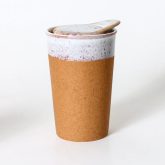
When the single use plasticised-cardboard take-away coffee cup goes through the temperature change of being filled with the hot liquid, thousands of micro and millions of nano sized plastic molecules fracture and fragment away from the plasticised-cardboard, into your cup of coffee. Almost all plastic we ingest passes through us, though the <1% we retain accumulates primarily in the brain. Lets not ingest plastic.

We note that washable plastic cups or plates will of course still leave the problem of millions of plastic particles shattering and fragmenting from the plastic due to temperature change of the hot food or drink, and ingested. We therefore request and highly recommend the inclusion in the policy that replacement of the single use items is to be with non-plastic cups and plates, even if washable, due to the the plastic ingestion issue. read more

Share

Caldera Report > With Every Cup of Coffee: 25,000 micron-sized and 12 million nano-sized microplastic particles!

Cardboard take away coffee cups are plasticised, because, if not, the cardboard cup would soak and fall apart when filled with liquid.

When the plasticised-cardboard of the take-away coffee cup goes through the temperature change of being filled with the hot liquid, thousands of micro and millions of nano sized plastic molecules fracture and fragment away from the plasticised-cardboard, into your cup of coffee. [Source: (link).]

Mostly the plastic we ingest passes through us, however, we accumulate plastic nano-particles and studies show them throughout our bodies.

The plastic nano molecules we accumulate accumulate primarily in our brains, we don’t know why, however plastic accumulates in our bodies mostly in our brain, Plastic accumulates in the brain at ~10 times higher levels than in the liver or kidneys (91% vs. 4% and 4% of total plastic mass in these organs). [Source: (link).] read more

Share

We Are All Ingesting Plastic

Plastic does not decompose back to its original naturally occurring elements. The plastic existing today, if exposed to sunlight, temperature change or abrasion, will degrade into smaller particles, though those particles will still exist, hundreds of thousands to millions of years from now.

The CEC note the growing awareness of the public to the issue of our unwanted ingestion of these plastic molecules, and the retention of these molecules in our bodies.

Bioaccumulation of microplastics in human brains.

25,000 micron-sized microplastic particles released from disposable paper cup into 100ml hot drink, 21 million sub micron particles [!].

Microplastic flakes found in ‘almost all’ bottles of mineral water on sale.  read more

Share

TSC October Monthly Meeting, agenda item: Roadside Plastic Litter Pick-Up Pre-Mowing: Admin Staff are Against [ !! ]

At the next Tweed Council Monthly public access meeting is a plastics issue, namely mowing it smaller vs picking it up first.

Plastic does not decompose, it may degrade into smaller pieces when exposed to sunlight or temperature change but it will always remain. We either pick it up or live with it as forever litter’. Should Council pick it up or leave it lying around forever?

If it’s on the roadside, is mowing it smaller and smaller the best solution? Council Administration Staff seem to think so.

Plastic is a forever molecule, the plastic today will still be here in 500 million years. Plastic does not decompose back to natural elements. It may degrade, if it is exposed to sunlight, temperature change, or abrasion, though that is it just getting smaller, it will NEVER go away, it will never decompose back to its natural elements. read more

Share

TSC Notice of Motion: Cr Firth – Accessing Soft Plastic Recycling

Councillor Nola Firth has submitted to Council the following Notice of Motion:

In Tweed shire we are currently collectively dumping 320 tons of soft plastic into landfill per year. There is considerable community concern on this issue. Single use soft plastic is recognised as a serious waste of our precious finite resources and as a killer of wildlife on land and in our rivers and seas. This is of particular concern in our biodiverse shire where we have the most threatened species in Australia.
Federal regulation is urgently needed to address this situation. The report (also on this agenda) on soft plastics recycling indicates the difficulty we as a regional council have in accessing soft plastics recycling. Even within cities it is not yet available for everyone. The primary cause is lack of created demand for recycled plastic despite its problematic plenitude and the willingness of community to recycle it. There is an urgent need for government action to achieve mandatory industry change, recycling support and community education.

Councillor Firth moves that Council write to the Federal Minister for the Environment and Water, the Minister for the Environment (NSW), Minister for Climate Change, Energy, the Environment and Water (NSW), local state members, local federal member, the Australian Packaging Covenant Organisation and Soft Plastics Stewardship Australia: read more

Share

World Environment Day Festival Success, with Expert Speakers, Live Music and Community Action, Well Done to all concerned!


The festival on 13 July celebrated biodiversity and climate solutions in the Northern Rivers.

The World Environment Day Festival returned to Murwillumbah on Sunday 13 July, bringing together the community for a day of environmental education, live music, and collective action from 10am to 3:30pm.

Hosted by Tweed Landcare and the Caldera Environment Centre, this year’s free festival shone a spotlight on the region’s unique biodiversity while promoting practical solutions to climate and conservation challenges facing the Northern Rivers.

The event was MC’d by Community Advocate and Organiser Chels Hood Withey, with an impressive lineup of expert speakers addressing critical environmental issues.
read more

Share

Plastic Reinforced Paper Tea Bags: We are ingesting millions of nano particles of plastic per cup of tea

We are all becoming more aware of unwanted ingestion of plastic molecules and the retention of these molecules in our bodies.

The paper of many popular brand tea bags are strengthened with plastic because otherwise the paper tea bag would fall apart in the hot water.

When a plastic strengthened tea bag goes through the temperature change of being immersed the hot water when making a cup of tea, thousands of micro and millions of nano sized plastic molecules fracture and fragment away from the plastic of the plastic strengthened paper tea bag into your cup of tea. [Source: (link).]

The plastic nano molecules we ingest accumulate in our brains, we don’t know why, however plastic accumulates in our bodies mostly in our brain, Plastic accumulates in the brain at ~10 times higher levels than in the liver or kidneys (91% vs. 4% and 4% of total plastic mass in these organs), at a rate of millions of nano particles of plastic ingested per cup of tea. [Source: (link).] read more

Share

ReUse: $4 Refill Tablet for household cleaning spray containers, at the CEC.

Plastic production reduction – don’t buy a new plastic spray bottle of cleaner each time, instead use an empty plastic spray bottle or get a glass spray bottle from us, then add the refill tablet, and then add water.

The refill tablets are available at the Caldera Environment Centre, $4 each.

“The tablets are 100% natural. Made with essential oils and plant-based ingredients.”

“Easy to use, Lovely Scents, Effective Cleaning, Safe for sensitive kids”

Not dwelling on the subject here, but plastic spray bottle production and disposal is a literal ecological nightmare for the very near future. You want it all to change, but it won’t.

However, for your own mental health, refill your empty spray bottle with a refill tablet and add water. read more

Share