Category: Tweed Shire Council

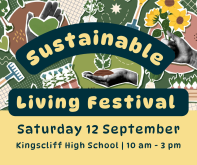
Sustainable Living Festival – 12 September – Program now available

TSC:

“The Tweed Shire Council Sustainable Living Festival is now less than 2 weeks away and the full program is now live. 

There are lots of topics to inspire our community about rewilding their backyards, electrifying their home, making more sustainable food choices, being prepared for emergencies and more resilient in a changing climate, ethical investing, and much more! 

There will be a local seamstress available to provide tips for mending and getting more wear from your wardrobe. 

The Kingscliff Men’s Shed will also provide tips and advice for fixing or upcycling your stuff. They will also have a range of second-hand tools on sale.

  • If you have small furniture items, bikes, clothes etc., bring them along for some tips!

There are more than 20 presentations and workshops, and 20+ stalls to browse. We’ll also have food and entertainment to create a great day out. read more

Share

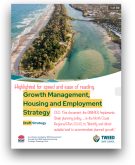
The TSC Draft Growth Management, Housing and Employment Strategy (Draft GMHES)

CEC Highlighted for speed and ease of reading.

The ‘GMHE Strategy’ implements the NSW State planning policy the North Coast Regional Plan 2041, which requires Councils to “Identify and direct suitable land to accommodate planned growth” “to respond to higher than expected housing demand.” The GMHE Strategy identifies that land.

From the TSC draft GMHES:

“Current population 99,793, growing to 107,125–119,082 by 2041. Previous GMHES work identified a potential upper limit of 128,333.”

“Capacity to deliver approximately 27,400 new dwellings.” [!]

Hinterland villages to grow via boundary expansions (Burringbar, Tumbulgum, Tyalgum and Uki) and infill: (Chillingham, Crabbes Creek and Stokers Siding). read more

Share

The Tweed Rural Housing Issue

CEC Note Regarding the Rural Housing component of TSC’s ‘Draft GMHE Strategy’:

WRT Section D1.5.1, p.60. “Rural Housing.

“Secondary dwellings (granny flats) or dual occupancy (detached) … in the RU1 Primary Production and RU2 Rural Landscape zones. These can occur where:

  • “lots have a minimum lot size of 5 hectares.
  • “secondary dwellings have a maximum [floor] size of 60m2.
  • “the additional dwelling is located no more than 100 metres away from the principal dwelling.
  • “sharing a single property access point and driveway.”

We [CEC] object to the draft 5 hectares minimum lot size for eligibility for the secondary dwelling / dual occupancy.

Our [CEC] position is that such allowance should be only on land over 40 hectares.

———-

Background: The NSW Government’s ‘North Coast Regional Plan 2041’ requires Councils to “Identify and direct suitable land to accommodate planned growth” “to respond to higher than expected housing demand.” Tweed Shire Council have in response published for public comment the draft of their updated ‘Growth Management, Housing and Employment Strategy’, the GMHES, which identifies that land. read more

Share

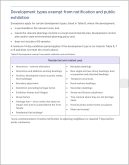
Submission – Variations and Changes to Complying Development

Summary 

The State is proposing to increase the uptake of ‘Complying Development’ applications to fast track housing.

Complying Development replaces Tweed’s building assessment codes with statewide, cookie cutter, ‘sea of roof’ style, building codes, that bypass consideration of virtually all other Tweed planning controls, bypass public exhibition, and bypass your right to legal appeal. 

The character of our Shire would be stripped away, forming one urban sprawl to the next under these State building codes. 

———-

Submission Objecting to the Proposed NSW Variations and Changes to Complying Development.  

The Caldera Environment Centre objects to the proposed NSW ‘Variations and Changes to Complying Development’ provisions as they apply to Tweed Shire. read more

Share

Submission: Low Rise Housing and Targeted Assessment Pathways

Summary:

The State is proposing another, whole new development pathway, called Targeted Assessments. This would be for virtually all other residential developments that still doesn’t fit the Complying Development criteria. 

The State’s cookie cutter building codes would again replace Tweeds building codes for these Targeted Assessments, and Tweed’s other planning and environmental controls would be weakened so much as to be virtually ineffective except in the most extreme cases.

Tweed has the highest number of threatened species in Australia, is a fragile, steep, wet, active, erosion caldera, and has an urban population within the midst of this stunning ‘National Iconic Landscape’.  We have an obligation to protect this region in Australia’s public interest.  read more

Share

URGENT Your Right to be Consulted under Threat

RED ALERT!!!

Very important – submissions needed please before 5pm 3rd June.

Proposed NSW Community Participation Plan.

NSW Labor and the Liberals have teamed up again this time to attack your right to community consultation on local development applications.

Thrilled by their latest success in December that will entirely strip your local Councillors of any powers to determine development applications, they are now trying to cut the community out too.

Under their new proposed Community Participation Plan a development application won’t be publicly advertised for comment if it apparently meets all the planning controls, whether it’s the house next door or a high rise.
The problem is that planning controls can be open to interpretation and arguable, eg bulk and scale, visual impact, privacy, environmental impact or even hazard risk impacts. That’s why we have consultation. read more

Share

Thank You Council: Microplastics with your coffee

Council voted 3 to 4 against the proposed single use materials policy, which would have banned plastic lined cardboard coffee cups at public markets on Council land.

Councillor James Owen, voting against the policy, said “Any Councillor who votes for this policy is against small businesses.” No Councillor James Owen, that’s not true. The other Councillors are against waste, single use plastics, and we reckon that if the small business owners of the market coffee shop stalls knew they are ingesting millions of nanoparticles of plastic with every cup of coffee, they themselves wouldn’t drink from a plastic lined cardboard coffee cup.

When the plasticised-cardboard of the take-away coffee cup goes through the temperature change of being filled with the hot liquid, thousands of micro and millions of nano sized plastic molecules fracture and fragment away from the plasticised-cardboard, into your cup of coffee. [Source: (link).] read more

Share

TVW: Planning Reform Fears

Tweed Valley Weekly interview with TSC Councilor Nola Firth about the planned NSW Planning Reforms Bill and its implications:

Share

TSC October Monthly Meeting, agenda item: Roadside Plastic Litter Pick-Up Pre-Mowing: Admin Staff are Against [ !! ]

At the next Tweed Council Monthly public access meeting is a plastics issue, namely mowing it smaller vs picking it up first.

Plastic does not decompose, it may degrade into smaller pieces when exposed to sunlight or temperature change but it will always remain. We either pick it up or live with it as forever litter’. Should Council pick it up or leave it lying around forever?

If it’s on the roadside, is mowing it smaller and smaller the best solution? Council Administration Staff seem to think so.

Plastic is a forever molecule, the plastic today will still be here in 500 million years. Plastic does not decompose back to natural elements. It may degrade, if it is exposed to sunlight, temperature change, or abrasion, though that is it just getting smaller, it will NEVER go away, it will never decompose back to its natural elements. read more

Share

TSC DCP Review, An Opportunity to Protect Non-Native Trees As Do Other Councils

The revised Development Control Plan(DCP), when it soon goes on exhibition for Public comment, will be an opportunity to support stronger protection of both native and non-native trees. 

Greens Councillor Nola Firth comments:

“Tweed Shire Council compared to other NSW Councils has had scant protection for non-native urban trees. 

“Non-natives here in the Tweed were only protected if they had a diameter of more than 80cm at breast height. To bring us into line with many other councils and to keep our precious trees intact, the diameter in the DCP is now 40 cm.’

So please have ‘Your Say’ on this change. It’s also an important opportunity to establish housing and landscaping controls that reduce emissions and urban heat, and protect biodiversity.” read more

Share