Category: Agriculture

Agriculture

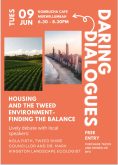
Housing and the Environment – Finding the Balance: Mur’bah Daring Dialogues

With the NSW removal of public consultation for neighbouring buildings approval, with the TSC vote to permit un-rate-chargable second remote dwelling construction, with the public apathy of defeatism … what on earth will become of the landscape ecology and what can be done to arrest the building out of the Tweed rural and natural environment. A Daring Dialogue at the Kambucha Cafe Tuesday 9th June 6.30pm.

Please also be aware of the Draft Growth Management Housing and Employment Strategy (GMHES) (soon up for exhibition) and a new fast track proposal by the state that will bypass the low rise housing (1-2 storey) DAs and their local conditions such as site placement, compensatory bush regeneration etc.  read more

Share

M’Arts, Food Forever

Talk & Community Forum.

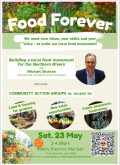
Food Forever!

Building a local food movement for the Northern Rivers with Michael Shuman.

Sat 23 May, 2–4:30pm at MJArts Precinct, Mur’bah.

Only $5 entry (kids free).

Ideas, skills & action needed!

Scan QR or get tix @ Humanitix.

Share

TSC: 1000 trees community tree planting for National Tree Day, Byangum, Sunday 27 July, and, Grants of up to $4,000 for Tweed farmers for sustainable land management.

TSC Tweed Link:

1000 trees community tree planting for National Tree Day! Col Wiley Park, Byangum,Sunday 27 July, from 9 am to 12 noon to help improve water quality, protect wildlife and reduce river erosion.

Also, grants of up to $4,000 for Tweed farmers for sustainable land management for projects that improve soil health, water management, biodiversity and more.

Share

Tweed Growth Management and Housing Strategy Survey

Below is the link to the survey and also the Caldera Environment Centre’s priority issues as a guide to help with your survey responses. Closing date is 12th Sept.

CEC points – from the perspective of preserving Tweeds internationally significant biodiversity and maintaining the character of local ‘village’ communities as well as preserving productive farmlands.

Suggested responses to survey questions:

Q on places and types of residential development for future population growth it is important that urban in-fill is prioritised. Increased density in areas that already have infrastructure will help protect natural bushland and agricultural land from clearing. It is VITAL that Environmental Offsets are not used in the process of urban development. The priority must be Avoid and Minimise – Offset only as last resort and ONLY within the development footprint. Priority sites to be funded under the proposed State Government Affordable Housing Fund should NOT be located on environmentally sensitive Crown Land, particularly on the Tweed Coast. read more

Share

Biosecurity Forum

Lismore Showgrounds.  9.00am (cuppa) – 2.30pm Wednesday 12th June 2019.     

Includes a free lunch.  RSVP for catering: 6623 3847 by 31st May

ALL WELCOME

  • Regenerative agriculture -Southern Cross University
  • Animal Biosecurity -Local Land Services
  • Crazy Yellow Ants- Local Land Services
  • Red Imported Fire Ants-Local Land Services
  • Wild dog baiting program-Local Land Services
  • Wild dog control -TRACS
  • Soil trooper update -Biological Solutions
  • Drone spraying display- Agflight
  • Biological control options-NSW Department of Primary Industries
  • Rangers Projects -Ngulingah Aboriginal Land Council
  • Tropical Soda Apple-Rous County Council

Program here

Share

Relocate Tweed Valley Hospital

Information to support submissions on the proposed location of a hospital on state significant farmland at Cudgen is at the Relocate Tweed Valley Hospital website   Submissions are due by 5pm on 13th December 2018.

Share

RALLY – RELOCATION OF TWEED HOSPITAL TO CUDGEN STATESIGNIFICANT FARMLAND (SSF)

Tweed Valley Regional Hospital Kingscliff

Right idea         

Wrong place      

Stand for the Land and our Community – Make your voice heard

This Saturday, October 20th  10 AM

Cudgen Leagues Club, Wommin Bay Rd Kingscliff

Its not a done deal

No land bought

No planning approval

No 2018/19 budget allocation

No community impact revealed

For more info go to https://RelocateTweedValleyHospital.org

Share

EDO slides from Towards Zero Deforestation Roadshow

Thanks for joining us last week at the Tweed leg of the Towards Zero Deforestation Roadshow.

Deforestation is causing havoc for our wildlife, our climate, and the health of local communities and our land. I’m so glad you were part of the Roadshow — together we have the power to end the bulldozing of trees and wildlife habitat across the state.

I’ve already started to receive leaf petitions in the post, which is incredible. If you took some home with you, I hope you’ve had some great conversations with your neighbours about the issue. If you’d like me to send you more, please reply to this email.

At the event, NCC Campaigns Director Daisy Barham mentioned we are taking the government to court over its land-clearing laws, which are causing enormous harm across the state. If you would like to support our crowd-funded legal action, you’re most welcome to do so through our website here.

If you filled in the form to get more involved in the campaign, stay tuned. I’ll be in touch soon!

We are very grateful that Jemilah Hallinan from the NSW Environmental Defenders Office joined us for the first four days of the Roadshow to explain the complicated nature laws in NSW. You can download a copy of her presentation slides here.

Thank you for all that you do for our forests and wildlife,

Shirley Hall

Nature Campaigner

Nature Conservation Council of NSW

P.S. At the Grafton event, Vickii Lett, a wildlife carer for more than 30 years, said: “Without healthy habitat, we may as well euthanize animals as they come in to care.” That is the devastating reality facing wildlife and it’s what I am dedicated to turning around. Thank you for being part of the solution our wildlife, climate, and forests so desperately need.

Share

An economic case for protecting the planet

We all share one planet — we breathe the same air, drink the same water and depend on the same oceans, forests and biodiversity. Economist Naoko Ishii is on a mission to protect these shared resources, known as the global commons, that are vital for our survival. In an eye-opening talk about the wellness of the planet, Ishii outlines four economic systems we need to change to safeguard the global commons, making the case for a new kind of social contract with the earth.

Published on Feb 14, 2018 –  TED: Ideas worth spreading   

Watch the talk at https://www.youtube.com/watch?v=tbvUCrS5_5I&feature=youtu.be

Share

Final Draft Rural Land Strategy presentation

There will be a drop-in session at Murwillumbah Civic Centre’s Canvas and Kettle Room, Thursday February 1 from 7pm to 8:30pm.  The session will cover the more than 140 proposed actions in the Draft Strategy which will shape the future of rural land use in Tweed Shire.  Draft Rural Land Strategy on exhibition until 28th February.

Share

Sunlight and Seaweed

Sunlight and Seaweed , the most recent book by Tim Flannery is a must-read book for all who want to look straight ahead at climate change and its effect on our planet and our lives. Importantly it is a book that presents hopeful solutions in the face of these challenges. Flannery believes we cannot now avoid the 2% warming level but he goes on to show that already there is innovative technology and initiatives which, if embraced in time, can mitigate the legacy we have created.

Central to the solution is a new and much more powerful method of collecting sunlight and one that allows storage of heat despite the disappearance of the sun each night.  Access to such clean and abundant power, along with other developing technologies, can  solve many urgent problems. For example, it will allow the cleanup of the swaths of polluted and unusable soils on the planet and of the mass of toxic rubbish in the ocean as well as giving access to unlimited  use of desalinated water from the sea.  Flannery also predicts  that food production in the future will rely on extensive use of hydroponics as well  large scale seaweed farming, the latter being also a way to substantially reduce carbon in the atmosphere. Each of the initiatives presented is already in operation and the book gives accessible detail about methodology and current development stage.

Flannery is sure that where we live and how we produce our food will all change dramatically and soon. He paints a picture of life in 2050 that is very different but quite liveable. The width of Flannery’s  perspective is astonishing.  The book is practical, visionary and positive.

Nola Firth

*** Now in stock at CEC

Share

Share

Cultivating Murder Saturday 3 June Regent Cinema Mbah

On the 29th July 2014 Glen Turner a compliance officer with the Office of Environment and Heritage was shot four times by a farmer and died on the side of an isolated public road in NSW, 40 kms from Moree.

Cultivating Murder tells the story of what happened and follows the murder trial to discover why it happened. It is an unusual murder case. The mystery is not “Who did it?” but “Why did he do it”? The accused is a wealthy New South Wales farmer. The circumstances of the shooting are shocking and perplexing. Glen Turner’s family friends and colleagues want to see the full weight of the law applied.

As the murder trial gets underway, the government have released the draft for new environment laws that will undo a quarter of century of conservation and protection and unleash a new wave of broad-scale clearing of land, (it is already underway) and destruction to fragile eco systems. It has implications for all land use in Australian.

We tell the story of Glen Turner’s family, Government employees, whistle-blowers, and rural producers in the region where the murder took place. The film will be dedicated to the memory of Glen Turner a professional and ardent environmentalist.

The film will be followed by a panel discussion and Q&A.

Doors open 6:00pm, screening commences 7:00pm

Tickets at the Regent or online at www.trybooking.com/283373
Adults $15.00
Concession $12.00
Kids  $10.00

Share

Renewables in agriculture workshop

Find out how your farm business can benefit from clean energy technologies to move water.  Learn from industry experts and solar providers about selecting the right solar powered pump for your agricultural needs.

Speakers will explain what government incentives are available, top tips on energy efficient pumps and how to plan for future climate variability. Talk to local suppliers and hear about case studies from our region.

Friday 13 May 2016, 10am til 1pm, Tropical Fruit World, Duranbah.  Bookings essential on 6670 2400 by 10 May.

Workshop poster.

Share

CEC response to Northern Councils E Zone Recommendations

Honourable Rob Stokes
Minister for Planning

office@stokes.minister.nsw.gov.au

14th December 2015

Northern Councils E Zones Recommendations

Dear Mr Stokes

Members of Caldera Environment Centre would like to submit their concerns in relation to the recommendations of the E Zone review of northern councils as they relate to Tweed Shire.

A recent public workshop on the recommendations was held by our group and the EDO at Murwillumbah. Those attending, approximately 40, overwhelming supported the implementation of E Zones in areas of native vegetation. This is a similar response to that at community consultation sessions during the period of the review. There have been very few issues against the implementation of E Zones in Tweed Shire.

The main considerations being the confirmation of the primary use being for environmental conservation or management and also fulfilling the criteria for E2 or E3 is impractical and onerous. These considerations are unrealistic in that this is a reversal of accepted practice to map and assess vegetation of conservation value, it will be time consuming and costly for Council and/or landholder to determine primary use as environmental conservation or management and likely to lead to disputes. Instead of a scientific approach to verify environmental values this is an ad hoc “use over past 2 years” approach. Similarly to verify the attributes to fulfil the E2 or E3 criteria to be undertaken by the listed methods such as site assessment, aerial photo interpretation and up to date flora and fauna studies will require significant allocation of expertise and funds by Council. It is likely that some areas of high conservation value vegetation currently zoned as environmental protection may not fulfil the recommended criteria.

Even when the land fulfils both criteria then it is not mandatory for the Council to apply the E2 or E3 zone. This certainly does not make sense.

Permitting extensive agriculture in E2 Zones, with consent, and E3 Zones without consent, will be detrimental to the conservation significance of the land within the zone. The example of activities provided in the document being, understorey grazing, can reduce the native seed bank and deplete groundcover and midstorey native plant species. This will result in a loss of biodiversity as there will be a lack of regenerating native plants and introduction of exotic species and loss of structure and function of the plant community.

The recommended removal of Scenic Protection and Aesthetic Values from E Zones will result in the loss of currently protected Scenic Escarpment which is a valuable asset to the tourism industry and also ensures stabilization of the steeper slopes by retaining the vegetation.

The mandatory objectives of E Zones in the Standard Instrument LEP are not met if permitting extensive agriculture is recommended. The objectives of E2 and E3 zones focus on protecting, managing and restoring areas with ecological, scientific, cultural and aesthetic values.

The recommendations are premature as there are current reviews of Biodiversity legislation and Coastal Management Reforms.

This recommended approach to E Zones has the potential to significantly undermine existing biodiversity values and has the potential to decrease future improvement in protection and enhancement of biodiversity values of the north coast.

The Caldera Environment Centre is extremely concerned by the recommendations as Tweed Shire and the other north coast council areas are of high biodiversity significance and there should be insurance that this is not depleted or lost.

Yours sincerely
Caldera Environment Centre

Grants Available for Caring for the land

Minister Joyce has announced the opening of the National Landcare Programme Sustainable Agriculture Small Grants Round 2015-16 (Small Grants Round).

Grants of between $5 500 and $55 000 (GST inclusive) are available for projects that will achieve the objectives of the programme. The programme objectives are:

  • increase the capacity and knowledge of farmers and fishers to productively and sustainably manage Australia’s natural resources
  • the adoption of appropriate management practices that will increase the production or improve product quality while maintaining or enhancing the natural resource base.

Examples of activities that may be eligible include:

  • field days, workshops, conferences
  • demonstration events
  • training or skill development sessions
  • community information or education sessions
  • development of decision-making tools
  • development of new information channels within the current knowledge system
  • conducting surveys.
  • read more

    Organic Farming Changes Agriculture from a Huge Carbon Source to a Carbon-DESTROYER

    Posted on April 30, 2015 by WashingtonsBlog

    From Source of 35% of All Carbon Worldwide to Carbon Sink

    Science China Press reports (via the American Association for the Advancement of Science):

    Approximately 35% of global greenhouse gases (GHGs) come from agriculture. Some argues that human can reverse global worming by sequestering several hundred billion tons of excess CO2 through regenerative, organic farming, ranching and land use. Increasing the soil’s organic content will not only fix carbon and reduce emissions, it will also improve the soil’s ability to retain water and nutrients and resist pests and droughts.

    To mitigate GHG emissions and retain soil fertility, organic agriculture might be a wise choice for decreasing the intensive use of synthetic fertilizers, protecting environments, and further improving crop yields. Recent research showed that replacing chemical fertilizer with organic manure significantly decreased the emission of GHGs. Organic farming can reverse the agriculture ecosystem from a carbon source to a carbon sink. [i.e. organic farming ties up and binds or “sequesters” carbon, instead of emitting any carbon. In other words, organic farming pulls carbon out of the environment and locks it in the soil.]

    To explore the potential of farmlands acting as a carbon sink without yield losses, Jiang Gaoming, a professor at the Chinese Academy of Sciences’ Institute of Botany, conducted an experiment on a temperate eco-farm in eastern rural China. Crop residues were applied to cattle feed and the composted cattle manure was returned to cropland with a winter wheat and maize rotation. Crop yield and greenhouse gas (GHG) emissions were carefully calculated according to the Intergovernmental Panel on Climate Change (IPCC) Guidelines for National Greenhouse Gas Inventories 2006.

    This study showed that replacing chemical fertilizer with organic manure significantly decreased the emission of GHGs. Yields of wheat and corn also increased as the soil fertility was improved by the application of cattle manure. Totally replacing chemical fertilizer with organic manure decreased GHG emissions, which reversed the agriculture ecosystem from a carbon source (+ 2.7 t CO2-eq. hm-2 yr-1) to a carbon sink (- 8.8 t CO2-eq. hm-2 yr-1).

    Making full use of crop residues as forage for cattle, collecting and composting cattle manure, and replacing part of the chemical fertilizer input with organic manure have been successfully shown to be ideal choices to reduce energy waste and cut GHG emissions without crop yield losses. A combination of organic manure and chemical fertilizer demonstrated the best result in improving soil quality and crop yields, while decreasing GHG emissions. Solely utilizing chemical fertilizer on the farmland not only led to increased GHG emissions, but also deteriorated the quality of the soil.

    Similarly, a different team of Chinese scientists publishing in 2013 in the prestigious American scientific journal Proceedings of the National Academy of Sciences found:

    N fertilizer … in China during the past 3 decades … is estimated to have contributed to a net gain in soil organic carbon of 85 Tg per year. Nevertheless, our data show that N fertilizer-related GHG emissions are several times greater in magnitude than soil organic carbon gains. For China to reduce the gap between GHG emissions and soil carbon sequestration and to move toward low GHG emission agriculture, it is necessary to examine the entire N chain to identify potential emission reductions.

    ***

    Decades of excessive N use have contributed to a variety of environmental problems, including large GHG emissions and serious water pollution. Our life cycle analysis shows the significance of the carbon footprint associated with the N fertilizer chain in China. GHG emissions tripled from 1980 to 2010, with the amount growing from 131 to 452 Tg CO2-eq⋅y−1, and, if unabated, to 564 Tg CO2-eq⋅y−1 by 2030. China needs a combination of reforms in the fertilizer industry and changes in management practices and technologies at the farm level to minimize excessive N use in the field. Our scenario analysis indicates it is feasible to reduce GHG emissions by 20–43% from a “business as usual” scenario by 2020 if an appropriate range of mitigation measures are introduced covering both N fertilizer manufacture and its agricultural use.

    Fracking Is Bad for the Environment

    The myth that “green revolution” farming practices – such as the use of large quantities of nitrogen fertilizers – is harmless is just one of the myths that have hampered our ability to address climate.

    For example, “clean natural gas” from fracking has been touted for years as a cure for global warming. But scientists say that fracking pumps out a lot of methane … into both our drinking water and the environment. Methane is a powerful greenhouse gas: 72 times more potent as a warming source than CO2. As such, fracking actually increases – rather than decreases – global warming. (The fracking boom is also causing other harmful effects.)

    So Are Nukes …

    Numerous scientists have also pushed nuclear power as a must to stop global warming. But it turns out that nuclear is .

    Mark Jacobson – the head of Stanford University’s Atmosphere and Energy Program, who has written numerous books and hundreds of scientific papers on climate and energy, and testified before Congress numerous times on those issues – notes that nuclear puts out much more pollution (including much more CO2) than windpower, and 1.5% of all the nuclear plants built have melted down. More information here, here and here.

    Jacobson also points out that it takes at least 11 years to permit and build a nuclear plant, whereas it takes less than half that time to fire up a wind or solar farm. Between the application for a nuclear plant and flipping the switch, power is provided by conventional energy sources … currently 55-65% coal.

    And a former NRC Commissioner says that trying to solve global warming by building nuclear power plants is like trying to solve global hunger by serving everyone caviar.

    Scam and Trade

    One of the main solutions to global warming which has long been pushed by the powers that be – cap and trade – is a scam. Specifically:

    • The economists who invented cap-and-trade say that it won’t work for global warming
    • Many environmentalists say that carbon trading won’t effectively reduce carbon emissions
    • Our bailout buddies over at Goldman Sachs, JP Morgan, Morgan Stanley, Citigroup and the other Wall Street behemoths are buying heavily into carbon trading (see this, this, this, this and this).

    As University of Maryland professor economics professor and former Chief Economist at the U.S. International Trade Commission Peter Morici writes:

    Obama must ensure that the banks use the trillions of dollars in federal bailout assistance to renegotiate mortgages and make new loans to worthy homebuyers and businesses. Obama must make certain that banks do not continue to squander federal largess by padding executive bonuses, acquiring other banks and pursuing new high-return, high-risk lines of businesses in merger activity, carbon trading and complex derivatives. Industry leaders like Citigroup have announced plans to move in those directions. Many of these bankers enjoyed influence in and contributed generously to the Obama campaign. Now it remains to be seen if a President Obama can stand up to these same bankers and persuade or compel them to act responsibly.

    In other words, the same companies that made billions off of derivatives and other scams and are now getting bailed out on your dime are going to make billions from carbon trading.

    War Is the BIGGEST Source of Carbon

    The U.S. military is the biggest producer of carbon on the planet.

    Harvey Wasserman notes that fighting wars more than wipes out any reduction in carbon from the government’s proposed climate measures.

    Writing in 2009 about the then-proposed escalation in the Afghanistan war, Wasserman said:

    The war would also come with a carbon burst. How will the massive emissions created by 100,000-plus soldiers in wartime be counted in the 17% reduction rubric? Will the HumVees be converted to hybrids? What is the carbon impact of Predator bombs that destroy Afghan families and villages?

    The continuance of fighting all over the Middle East and North Africa completely and thoroughly undermines the government’s claims that there is a global warming emergency and that reducing carbon output through cap and trade is needed to save the planet.

    I can’t take anything the government says about carbon footprints seriously until the government ends the unnecessary warsall over the globe.

    So whatever you think of climate change, all people can agree that ending the wars is important. Anyone who supports “humanitarian war” by the U.S. is supporting throwing a lot of carbon into the air. (War also destroys the economy.)

    Geoengineering: More Harm Than Good?

    Many of the “geoengineering” solutions being proposed would cause more harm than good.

    Some people are pushing geoengineering because they say “we have to do something“. But we should not do anything that doesn’t have a net benefit … and most geoengineering proposals would have adverse health and environmental impacts, and could even boomerang and increase warming.

    So What Should We Do?

    As noted above, switching from synthetic nitrogen farming to organic farming will dramatically reduce carbon output.

    In addition, top climate scientists say that soot plays a huge role in the melting of snow and ice. The director of Stanford’s Atmosphere and Energy Program and professor of civil and environmental engineering (Mark Jacobson) believes that soot is the primary cause of melting arctic ice, and says:

    Controlling soot may be the only way to significantly slow Arctic warming over the next two decades …

    Reducing soot will be cheaper than the “decarbonation” which many policy-makers have proposed. And it would increase the health of millions of people worldwide.

    Using specific smart combinations of solar, wind and geothermal energy will also greatly reduce the carbon load.

    Finally, we must decentralize power generation and storage. That would empower people and communities, produce less carbon, prevent nuclear disasters like Fukushima, reduce the dangers of peak oil (and thus

    prevent future oil spills like we had in the Gulf read more

    Seeds and Soil vs. the Tyranny of Corporate Power: A 2015 Message of Hope

    By John Queally
    Global Research, January 04, 2015
    Common Dreams 1 January 2015

    It has been declared ‘the International Year of the Soil,’ but the year ahead, according to Dr. Vandana Shiva, will also see key developments in the global fight to overthrow corporate power with true democracy.

    Last year, the United Nation’s Food and Agricultural Organization officially declared that 2015 would be celebrated as the International Year of the Soil citing the threat to one of the key ingredients to the planet’s food and farming systems posed by “expanding cities, deforestation, unsustainable land use, pollution, overgrazing and climate change.”

    “In the seed and the soil we find the answers to every one of the crises we face. The crisis of violence and war; the crisis of hunger and disease; the crisis of the destruction of democracy.” —Dr. Vandana Shiva

    Though many recognize the FAO declaration as a largely symbolic gesture, many advocates of organic food and sustainable agricultural are planning to seize the designation as a way to push forth their message that the health of the planet’s soil should not be relegated as a metaphorical issue, but rather one that should be at the very heart of serious conversations and policy changes humanity must begin in order to transform its economic systems, its democracies, the way it generates power, and the way it feeds itself.

    Dr. Shiva says that within ‘the soil lies the answer to the problems oil has created’ and that ‘organic gardens of hope everywhere’ and ‘farms that grow real food’ can be a powerful enough force to help upend the march of globalized neoliberalism that is taking the planet towards the brink of destruction. (Image: Magnus Franklin/flickr/cc)

    Summarizing the issues at stake and the fight ahead, one of the world’s most prominent advocates for democracy and organic agriculture, Dr. Vandana Shiva, an Indian activist and founder of the seed-saving organization Navdanya, has posted an impassioned New Years message to those battling on behalf of food sovereignty, economic egalitarianism, agroecology, climate action, and social justice.

    In the video posted to the website of Seed Freedom, Shiva applauded all those who have stood up for the the rights of people and Mother Earth against the greed and disregard perpetrated by corporate power and the neoliberal economic model which is ravaging economies, human rights, and the planet’s ability to sustain life.

    Looking back on 2014, Shiva celebrated that it was a year in which the phrase ‘We Are All Seeds’ rang out in resonance aross the world and described how “for a while we might lie underground, but at the right moment we germinate and burst forth with our full potential.”

    At the dawn of 2015, however, she welcomed global activists to look forward to this coming ‘Year of the Soil’ and called it a year that will commemorate “earthiness… groundedness… [and] rootedness” of individuals and organizations that make up the global movement for climate, economic, and social justice.

    The year ahead, she said, will be a year in which the seeds—”of hope and love” and “of abundance and creativity”—that activists and well-meaning citizens from around the world have sown and will sow, shall be political and cultural seeds that “will multiply and show the way forward.”

    “In the Year of the Soil,” Shiva continues, “let us celebrate the connections between Mother Earth and ourselves. We are, afterall, made of the earth. We are made of soil.”

    She said, “In the seed and the soil we find the answers to every one of the crises we face. The crisis of violence and war; the crisis of hunger and disease; the crisis of the destruction of democracy. We will not allow corporations to allow everyone to believe that they are persons. Corporations are legal constructions—that’s where their place is. People, through democratic processes, give permission to what sort of business activity is sustainable, what business activity is equitable, what business activity respects, with dignity, the life of this planet, the life of all beings, and the lives of all human beings.”

    Shiva cited recent lawsuits filed by corporations against places like Vermont and Maui, Hawaii for citizen-led efforts to ban GMO crops or label GMO ingredients as examples of an illusionary charade in which business interests masquerade as people. The movement she is speaking to, she said, will instead “create a reality in which reality rules—the reality of the living ecological processes of the planet.” She offered that such a reality would be shaped by the ordinary lives of citizens by democratic rule, not fabricated by corporate pr campaigns and disinformation.

    The challenge of fighting for true democracy, according to Shiva, “is going to be the single biggest challenge throughout 2015.”

    Within that challenge and amid the context of the ‘Year of Soil’ ahead, Shiva finally reminded her listeners that it is organic farming and ecological agriculture (frequently called agroecology) which offers the “answer to the havoc that’s being created by fossil fuels.” Quoting from her book, Soil Not Oil, Shiva argued that “in the soil lies the answer to the problems oil has created” across the planet.

    “The joint crises of climate change and biodiversity erosion can both be addressed by planting gardens everywhere—full of biodiversity; full of the celebration of life, well-being, and abundance. Gardens of hope everywhere. Farms that give real food. We will continue to create the other world that we are sowing—seed by seed, inch-by-inch of soil, person by person, community by community—until all of this planet is embraced in one circle of a resurgent life and resurgent love. We will not give up.”

    Watch:  We Are All Seeds – A New Year Message from Dr. Vandana Shiva for 2015  

    Checkout the   Navdanya Brochure

    Was also  Posted on GlobalResearch.ca 

    = = = = =  = = = =

    Share

    Rural Land Strategy- CEC Submission to Tweed Shire Council 31-May-2013


    Submitted 31 May 2013


    The Caldera Environment Centre (CEC) would like to make the following submission to the Tweed Shire Council Rural Land Strategy.

    =&0=&

    As discussed below, The CEC promotes a sustainable ecological ethic of housing development. We disagree with the concept of small rural subdivisions, and would promote an alternative paradigm of rural settlement based on the ideas of Multiple Occupancies (MOs). This would enable the ‘best of both worlds’ where land parcels are kept intact from renegade industrialists, local communities are fostered and population growth can be maintained. There are lessons to be learned from past experiences with MOs, particularly in terms of land management and self-sufficiency. However, that should not be a reason to limit them in favour of cloning city-suburbs (like what is being proposed for Mooball or at Mebbin Springs) in the middle of nowhere. It is important with this ruralising development that wildlife corridors are an integral part of the planning proposals. Effort needs to be made so that there is no further fragmentation or degradation of ecosystems and that the riparian zone is protected. If well managed, these corridors may be expanded with agroforestry and could provide the timber required to eventually replace the housing in the clusters by selective logging.

    The idea of land as the “farmers’ superannuation” is an idea that needs to be reconsidered. Folklore has it that farmers will subdivide their land so they can cash in on their ‘super’ upon retirement; they become farmers of people, not cows. Such a concept is anathema to sustainable living, and will without enlightened oversight, inevitably lead to the conurbation and suburbanisation of the Tweed Shire, resulting in yet another, sprawling urban wasteland like every other area in Australia. Proper planning now can shift the Tweed toward a more sustainable future, moving away from current unsustainable patterns towards something unique and resilient merely by promoting Multiple Occupancies in favour of subdivision.

    =&1=&

    There is every likelihood that the sustainability of agriculture will not occur through the endeavours of broad acre farming, but in larger rural populations functioning more at a gardening level. It is suggested that it is only at this level that it is possible for a farming/gardening agriculture to not only become organic, but move to greater on-farm “polyculture” (or diversity), to reducing industrial dependence and to local marketing – all of which are the basis of sustainable agriculture. Industrial agriculture currently feeds and clothes the nation but is inherently unsustainable, relying on fossil fuels, fertilisers and other manufactured inputs; while the movement away from industrialisation, potentially feeds the nation sustainably in the future.

    At a gardening level, gardening/farming blocks need be relatively small compared to industrialised farms. There are many relatively small blocks of land in Tweed shire that are too small to be profitable for industrialised agriculture, whose land is often agriculturally marginal, but that are nevertheless suitable for agriculture functioning more at a gardening level. Many marginal lands begin their improvement from being marginal when their soil organic carbon (SOC) increases. Increasing of SOC is more likely to occur with gardening farms than with broad scale agriculture that has mostly economically constrained itself to the use of artificial fertilisers. Agricultural development with Multiple Occupancy gardening farms potentially puts labour in proximity to weeds in both time and space, and enables increasing biomass to be used to increase gardening SOC.

    The current planning of the development of Mooball with small (urban consolidation) blocks of land with sewerage and water reticulation added has been reductionist or non-holistic planning that mostly evades the fact that there is an environmental crisis, rather than beginning the process of planning for sustainability. Urban consolidation is a limited representation of what humans can do, and misses a planning opportunity about how humans can occupy rural lands sustainably. Furthermore, there is evidence that human social contact and community cannot function properly under dense living conditions.

    =&2=&

    At the TSC community discussion forum on the 15th May, in Murwillumbah, at a table sat at by two Caldera Environment Centre (CEC) representatives and including Council’s sustainable agriculture officer, Sebastian Garcia-cunca, it was perceived by the CEC members that most people at the table felt that when population is planned for further expansion from urban areas, it is done with an attempt at ruralising the development as it moves into rural areas. It was understood that this involved more things like chooks, vegetable gardens and perhaps orchards.

    During the small group discussions at the RLS meeting, one comment repeated by traditional graziers was that things, from a farming development point of view, have to be done markedly different to what we propose here. It is suggested the major difference is that rather than the area of land being the major feature of these gardening rural MOs, it is how the people use it that is of major consideration. How that is actually achieved requires major discussion. Because this is a difficulty in planning, is not good enough reason, why gardening rural agricultures should not be planned.

    =&3=&

    In the ruralising of Multiple Occupancies, emphasis needs to be given to alternative technologies. Dry composting toilets, on-site grey water recycling/disposal and adequate water tanks to catch the gift in this area of a relatively heavy rainfall, are an integral part of the development. Alongside this land area necessary for chooks, vegetable garden and orchard need to be catered for. Self-sufficiency in water collection is a necessity of future developments in order to eliminate the “downstream”, or what Fritjof Capra labelled as early as the 1980’s, the “inflationary”, effects of not fixing problems at their source. In Tweed shire, this lack of planning for water tanks has in more recent times led to a dam debacle, in ironically and ashamedly, one of the most climatically, water-rich areas of Australia.

    It is important that this form of gardening development does not intrude on prime agricultural land. At the beginning of developing a post-industrial society (since the population is almost wholly fed and clothed by an existing industrial agriculture system), agriculture and prime land needs to be preserved until such time as the gardening cultures prove they are self-sustaining in terms of successfully being able to feed and clothe the people who are engaged in them. To that end, at this time of the society’s agricultural history, all prime farming land needs to be preserved intact in order that industrial agriculture can maintain its viability as long as it is required.

    Despite land area for this type of gardening development being relatively large, compared to the usual urban model, the costs of service delivery are reduced. There is no need for curbing and guttering or footpaths which are the creation of impervious surfaces, the concentration of water flow and its attendant erosion problems, and the prevention of storm water percolation to sub-surface water aquifers. Guttering acts to prevent tyre and oil residues being degraded by soil micro-flora before the residues are carried to watercourses. There is also no need for such extensive street lighting in rural areas; light pollution from Hundred Hills now stains the sky and further reduces star gazing options. As previously mentioned there is also no need for dependence upon centralised sewerage or water piping when alternative technologies are employed.

    Blocks need only have one entrance road to a cluster of rural houses whose total population is approximately 150 (See appended article, Sociability and Progress.) This sized cluster of houses has each house’s agricultural acreage mostly facing outward from the cluster. The houses are clustered close enough for people to easily walk to visit each other, yet far enough away that a husband and wife arguing cannot be heard. In order to make these MOs cheaper, Council could insist that the road into the housing cluster, and its table drains, are maintained by the owners of the cluster rather than Council.

    It is understood that such a MO could be a planner’s nightmare: there is no guarantee that householders will actually work the land rather than say, interminably and unsustainably cut the grass with ride-on mowers or find greater convenience in buying the economically cheaper produce from industrialised agriculture, rather than grow dearer food on their own land. Even the planting of these blocks out with primarily native vegetation, would not necessarily be the movement to sustainability compared to householders moving toward independence from the industrialised food supply. It is this greater agricultural sustainability and more intensive use of land that in the long run ensures more land is able to return to habitat.

    =&4=&

    It is suggested that there are several reasons why current Multiple Occupancies are not currently successful at small scale food production:

    a)      They, like most Western people are rusted onto the cheaper food of the industrialised system, particularly if they are working “out” to maintain their economic journey and are near shops selling industrialised food. There is often too, an attachment to traditional foods that are grain based whereas diet-science appears to be pointing in the direction of fruit, vegetables, nut, seeds and tubers as human food. It still does not appear to be widely understood that it is the growing of fruit and nut trees that are the foundation of human food supply and they are comparatively easy to grow in terms of low mechanisation, compared to grains.

    b)      There appears to often be inadequate land set aside for the provisioning of fruit trees as the foundation of food supply for the occupants. People generally have no understanding of the area of land with mixed fruit trees that is necessary to feed a person. Currumbin Eco village for example, arguably, has not enough land to feed the occupants, and Lilyfield community in the Kyogle Shire, may have enough if it carries out major land clearing of native vegetation. M.O.’s ideally should begin on already cleared land.

    c)       Small scale food production (SSFP) is not considered practical or recognised as a legitimate lifestyle choice by contemporary society. Of course there is good reason for it to be considered illegitimate:

    • SSFP is generally not economic in terms of the industrialised system. It is instead the production of the environmental and social capital, but in a society such as ours which is unbalanced in its emphasis upon the economic; the production of the environmental and social capital isonly currently paid lip service. SSFP is said to be illegitimate because it is not in the “real” world.

    d)      The legitimacy of SSFP has also been held up by planning generally failing to recognize the enormous environmental and social benefits accruing from decentralisation and potential self-sufficiency in development models, rather than the constant insistence on centralisation. It took a lot of effort to get composting toilets legitimised in the Tweed shire and the widespread use of rainwater tanks is experiencing the same dragging of the heals by planners. There cannot be expected to be an outpouring of gardening produce when the society generally assumes this gardening model is carried out by lesser mortals. The society’s regulatory bodies appear to not approve of self-sufficiency because recycling one’s own bodily excretions and the harvest rainwater, have to be fought for rather than seen as genuine indicators of progress in the midst of an environment crisis.

    =&5=&

    There is much to be learned from history, and repeating the same mistakes as other areas when proposing development of rural lands will forever tarnish what makes the Tweed unique in the present. There is no inevitability to the process of subdivision and urban consolidation, there is no ‘invisible hand’ of the market guiding the development of our future, and such ideas of continual and inexorable upward progress are a fallacy (what Karl Popper calls the Poverty of Historicism). The CEC offers an alternative perspective to the current development in Australian society that favours large houses on small blocks dependent on centralised infrastructure.

    Sincerely,

    (Signed)

    Samuel K. Dawson

    Coordinator, Caldera Environment Centre

    With the invaluable assistance of Geoff Dawes, CEC committee member.


    = = = = = = = =
    Share