Category: Native Forests

The INFM survived! But coal and gas can’t buy the credits!

The ANU NEFA et al inputted INF Method for removing forests from the logging schedule has survived the disallowance vote and remains in place.

In return for not disallowing the INFM, Greens HQ forced Labor to exclude the biggest buyers, ie coal and gas, 70% of the demand, from buying the INFM credits.

Previous modeling predicting income to the government was built around a market that included the large polluters.

Manufacturing and other polluter’s must now fund the INFM credits (their CO2 is much more palatable).

The reduced demand will impact outcomes.

Share

About the coming 15 September Senate vote on the disallowance of INFM native-forest method.

There is already a carbon credit system in Australia.

Carbon polluters already buy credits generated by carbon absorbing projects such as land rewilding or replantings and for changed farming and burn-off methods.

Public native forests taken off the logging schedule can now also generate carbon credits.

The NSW Labor Government contracted the Australian National University (ANU) to help draft the ‘method’ (the rules) by which carbon credits are generated in return for taking the forests off the logging schedule.

ANU’s Professor Andrew Macintosh’s team had spent years calling out weak carbon methods, so having them design this one is, from the forests’ point of view, a big win. It could have been Price Waterhouse instead. read more

Share

NEFA: “We are asking you to contact the Federal Greens.”

From our Friends at the North East Forest Alliance (NEFA):

NEFA: “We are asking you to contact the Federal Greens. [The Federal Greens email addresses and a text section to copy and paste are at the bottom of the page]

NEFA: 

“This isn’t about whether carbon markets are perfect.

It’s about whether we seize a rare opportunity to protect our forests or risk another decade of industrial logging.

Please let them know that:

  • you support ending logging of NSW public native forests as soon as possible; 
  • you believe the INFM provides a practical pathway to achieve that goal; and 
  • you ask them not to close off this opportunity. 

The Federal Government has adopted the Improved Native Forest Method (INFM) that allows governments to earn carbon credits (ACCUs) for 15 years if they end logging of public native forests and protect them for 100 years. This is a game changer. read more

Share

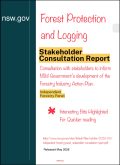
NSW Government’s Forest Industry Action Plan, Consultation Report Released

Stakeholder Consultation Report, attached, interesting bits highlighted for quicker reading.

Highlights:

Submissions from more than 1500 individuals and 160 organisations.

Viewpoints and evidence in support of environmental concerns tended to submit that:

• Native forest harvesting in NSW has major impacts on biodiversity and endangered species and should cease as soon as possible.

• Healthy, protected and intact forests are intrinsically, socially and culturally valuable.

• The forestry industry does not have the capability to deliver beneficial environmental outcomes.

NEFA: “Stakeholder Consultation Report confirms the public want an end to logging public native forests.”

“The Stakeholder Consultation Report for NSW’s Forestry Industry Action Plan (FIAP) raises more questions than it answers, though with 70% of submissions expressing support for ending native forestry it confirms that most people want an end to this archaic and destructive industry. read more

Share

[nefanews] Local Land Services Amendment (Private Native Forestry) Bill 2026

The Shooters and Fishers Party seek to stop Councils that require consent for PNF in rural zones (most private native vegetation) from doing so, such as Kyogle, Tweed, Coffs Harbour, Port Macquarie-Hastings, ect.

They don’t want logging to be subject to the same scrutiny as most other developments that require DAs – such as actually having to survey for threatened species, complying with Council requirements, notifying neighbours, and assessing impacts. They just want to comply with LLS’s tick-a-box assessments.  

The Shooters and Fishers have introduced “An Act to amend the Local Land Services Act 2013 and the standard instrument prescribed for principal local environmental plans under the Environmental Planning and Assessment Act 1979 in relation to private native forestry; and for related purposes“. read more

Share

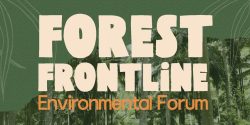
Forest Frontline Forum

On March 21, at the Southern Cross University campus, hear from frontline campaigners and local experts who know the forests best, to hear about the plan to secure protection for Richmond River Koala Parks.

This is a chance to understand what’s at stake – and how protection is possible when our community stands together.

Share

The Wollumbin Caldera – It’s Geological Formation and Flora

The Wollumbin / Mount Warning shield volcano and its erosion caldera is a unique volcanic landform which has functioned as a refugium, over the 20 million years since it’s formation, for a core area of Gondwana rainforest flora.

The Caldera is located in a major climatic transition zone, between temperate and tropical floral and faunal species, giving high species diversity under a wide range of habitats, its volcanic origins and very high localised rainfall make this a very complex and interesting landform.

20 million years ago the continent, bearing its Gondwanic rainforest flora, was moving north, away from Antarctica. The continent had been passing over one of the earths hotspots, and this had given rise to a chain of volcanic activity down the east coast of the continent, including the volcanic eruption and subsequent laval covering of the landscape which was the formation of the Mount Warning / Wollumbin Shield Volcano. The height and spread of the laval mound of the volcano is estimated at 2km high and a spread which for example extended 30km out onto the continental shelf beyond the current sea level. read more

Share

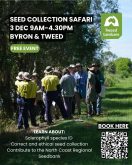
Tweed Landcare UPCOMING EVENT Seed Collection Safari

Join Tweed Landcare and Michelle Chapman for an engaging and informative seed collecting safari bus trip. Contribute to the North Coast Regional Seedbank Project, creating a vital, genetically diverse native seedbank for the entire NSW North Coast region.

Share

The Tweed Valley: “A deep rich valley clothed with magnificent trees, … ” Oxley: 1823

In 1823 John Oxley was the first European to see the Tweed Valley, and he wrote of it: “A deep rich valley clothed with magnificent trees, the beautiful uniformity of which was only interrupted by the turns and windings of the river, which here and there appeared like small lakes. The background was Mt. Warning. The view was altogether beautiful beyond description. The scenery here exceeded anything I have previously seen in Australia.”

Oxley was sailing up the eastern coast of Australia from Sydney in search of a penal settlement site “for difficult convicts”. Sailing further, they decided on Redcliffe, part of now Brisbane (perhaps explaining something of the Queensland culture of today). read more

Share