Category: Planning

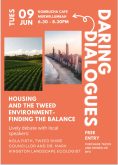
Housing and the Environment – Finding the Balance: Mur’bah Daring Dialogues

With the NSW removal of public consultation for neighbouring buildings approval, with the TSC vote to permit un-rate-chargable second remote dwelling construction, with the public apathy of defeatism … what on earth will become of the landscape ecology and what can be done to arrest the building out of the Tweed rural and natural environment. A Daring Dialogue at the Kambucha Cafe Tuesday 9th June 6.30pm.

Please also be aware of the Draft Growth Management Housing and Employment Strategy (GMHES) (soon up for exhibition) and a new fast track proposal by the state that will bypass the low rise housing (1-2 storey) DAs and their local conditions such as site placement, compensatory bush regeneration etc.  read more

Share

Please make your Submission to the TSC Draft Development Control Plan

The opportunity to ‘Have Your Say’ on the Tweed Development Control Plan closes 5pm Friday!

We’ve attached the CEC submission document for your interest, and for copy and pasting all or parts of as your own submission which is allowed and we encourage.

Please do make a submission, it is quick and easy on the Council website (link here: www.yoursay), or forward the attached CEC submission expressing your own support for it (email to tsc@tweed.nsw.gov.au).

To the General Manager Tweed Shire Council, read more

Share

WITHDRAWN! Fingal Mining Exploration Licence Application

Update: The application has been withdrawn.

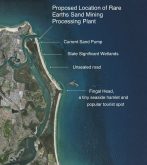
An exploration licence application to sample the mineral content of the sand that is being pumped by the Tweed Sand Bypass at Fingal Head NSW to the Gold Coast beaches was advertised in the Tweed Valley Weekly Public Notices on 19th Feb.

Minerals sought include Rutile, Zircon and Ilmenite. 

If sampling is successful the aim is to build a processing plant next to / connected to the Sand Bypass to extract these heavy minerals from the pumped sand.   read more

Share

TVW: Planning Reform Fears

Tweed Valley Weekly interview with TSC Councilor Nola Firth about the planned NSW Planning Reforms Bill and its implications:

Share

NCC: Email your MP, Template, Stop the NSW Government’s Plan to Weaken Planning Laws

This is the most significant reduction in development controls in 50 years, and it’s being done with zero public consultation. If passed, these reforms will be a giant step backward for environmental protections in NSW and significantly undermine the progress we are aiming to achieve. 

If passed this Bill will:

  • Remove mentions of environmental protection and conservation of native species from the objects of the EP&A Act, and shift focus away from community wellbeing and public interest.
  • Introduce of Targeted Assessment Developments as a new fast-tracked assessment pathway — with no guardrails on what type of development could be fast-tracked with minimal assessment.
  • read more

    Share

    “This is a code red for environmental protection in NSW.”

    NCC: “The NSW Government’s proposed changes to the Environmental Planning and Assessment Act opens the way for reckless developments of all kinds. 

    “This is a code red for environmental protection in NSW. If passed as is, the reforms on the table would have devastating consequences.”

    “These extreme changes to our environmental protection laws would strip away environmental scrutiny, making it easier for damaging developments to slip through.

    EDO

    Share

    The Caldera Rim Walk

    NSW.gov have created “a master plan for the Caldera Rim Walk in Wollumbin National Park.

    A proposed 8km (return) half-day bushwalk and associated facilities in Wollumbin National Park.

    The walk is a Grade 4 hiking track in accordance with the Australian Walking Track Grading system, offering a challenge to bush walkers, climbing over 500m in elevation to the top of the inner Tweed Caldera, through rainforest, wet sclerophyll and drier eucalypt forest, showcasing spectacular views of the Wollumbin summit and surrounding caldera.” read more

    Share

    Tweed Growth Management and Housing Strategy Survey

    Below is the link to the survey and also the Caldera Environment Centre’s priority issues as a guide to help with your survey responses. Closing date is 12th Sept.

    CEC points – from the perspective of preserving Tweeds internationally significant biodiversity and maintaining the character of local ‘village’ communities as well as preserving productive farmlands.

    Suggested responses to survey questions:

    Q on places and types of residential development for future population growth it is important that urban in-fill is prioritised. Increased density in areas that already have infrastructure will help protect natural bushland and agricultural land from clearing. It is VITAL that Environmental Offsets are not used in the process of urban development. The priority must be Avoid and Minimise – Offset only as last resort and ONLY within the development footprint. Priority sites to be funded under the proposed State Government Affordable Housing Fund should NOT be located on environmentally sensitive Crown Land, particularly on the Tweed Coast. read more

    Share

    Submission – ‘Nightcap on Minjungbul’ (DA21/0010) Caldera Environment Centre

    Submission opposing DA21/0010 ‘Nightcap on Minjungbul’.

    A concept development application (DA) was lodged with Tweed Shire Council on 14 January 2021 over land at 2924, 2956, 2984 and 3222 Kyogle Road, Kunghur & Mount Burrell, hereafter referred to as “the site”. The application seeks approval for: Integrated Development – staged concept development application under s4.22 of the EP&A Act 1979 for multiple rural land sharing communities with stage 1 seeking approval for the upgrade of the existing private road and associated earthworks, vegetation removal and site construction office and storage area (NRPP). read more

    Share

    Rally to Save the Train 3pm Thurs 15th Feb Murbah Railway Station

    Message from Northern Rivers Railway Action Group

    Dear Team,

    As we all live at the far flung districts of the Region and have no train service to enable easy meeting, I am copying you my March Plan, Route Plan and Safety Management Plan.

    It is attached as an easy to Print PDF, or copied below.

    Please print, Share, Forward, tell your friends, and let’s pull a big crowd and make a very good impression.

    Remember the absolute rule, this is to be Peaceful, so, no badgering people, No disturbance to Businesses, No Shouting or Fist waving.

    Be very tolerant, there may be some who will attempt to disrupt or cause a fight.  Just ignore any heckling.

    Keep off the road and follow directions of the Road Crossing controllers who will be wearing high visibility vests (The Polite Force!).

    We are NOT a mob, and we certainly don’t want to appear as one..

    We will let our numbers do the talking.

    I think a silent slow procession, like a funeral march is most appropriate.

    Please ensure you are fully au fait with the Route and safety management plan.

    Wear Red!!!

    Copy Below…

    10-02-2018

    Northern Rivers Railway Action Group Inc 1500722

    William (Bill) James FENELON  NRRAG Rep.

    0411 123 405

    wfenelon@hotmail.com

    To;          The Commissioner of Police

    Or, to whom it may concern.

    Sub;        Notice of intention to hold Public Assembly and Procession

    Plan of event, route plan, and safety management plan

    Date of event;                      15th of February 2018

    Time of assembly:                15:00hrs

    People wishing to be involved will assemble prior to 15:00hrs at Murwillumbah Railway Station.

    Parking at this location has been assessed and ample parking is available. (It’s a railway station)

    Tweed Tourist Centre manager has been consulted regarding parking and they have no issues with us using these parking spaces.

    Do NOT park in the Bus stop!!!

    We will ensure all vehicles’ will be legally parked in proper parking places.

    There will be short speeches using a Public Address system and we will ensure the volume is not excessive, to not annoy non participants or disturb the peace.

    This address will include a briefing to participants on the route, expectations regarding behavior and safety controls in place.

    Marchers will depart the Railway station shortly after 15:00.   March will proceed along a planned route, (described in detail below) along the pedestrian foot path and never on the road, towards the TSC Council Building and assemble in the Park outside until 4pm. Some will go inside and attend the meeting. Some will remain outside in the Park; others will disperse individually and go home.

    This will be the end of the rally.

    Risk assessment and safety controls

    The route will utilize the pedestrian footpath and never be on the road; however, it will be necessary to cross some roads at 3 carefully considered places.

    We intend to do this in a very control manner and NOT interfere in any way with road traffic.

    Marchers will be mostly 2 abreast and approx 2 meters apart.

    Business along the route have been consulted and these include South Murwillumbah Post Office, Cafes along commercial road and the Tweed Tourist Information centre.

    Every road crossing on the planned route will be attended by crossing control marshals (The Polite Force), wearing High Visibility vests, and communications will be achieved using portable VHF radios.

    They will hold up the Marchers when necessary and only allow them to cross when the road is clear of all approaching vehicles’ and safe. .

     March Route

    From the Railway station, (Sydney End of station) opposite Prospero Street, cross Tweed Valley Way (TVW) , then along the wide footpath on the Post Office side of  Prospero Street ,

    Until corner of River Street,

    Then crossing River Street at intersection of Prospero and River, to the River side park opposite.

    From there, along the path in this park, and utilizing the underpass, beneath the Bridge over the Tweed River. Thus avoiding interfering with traffic flow along this busy road.

    Then crossing Tweed River Bridge on North side, continuing along the same footpath along Commercial Rd (side closest to river.) until intersection of wharf street at the Southern Cross Credit Union Building.

    From here we have two options and I would like Police advice on which should be preferred.

    Option 1 continue on footpath along River side of Tumbulgum Road and cross Tumbulgum road in the vicinity of the levee wall park, across to the Park outside Council Offices, thus requiring only one road crossing here,

    Or Option 2

    Use the pedestrian crossing at corner of Wharf and commercial, but this is a very busy intersection and there would be two road crossings here. Although there is two pedestrian crossing, this option would be more disruptive to traffic and businesses.

    In lieu of police advice my preferred safest route would be option 1, although this means crossing at a non marked area.

    My credentials to conduct risk assessment properly and control safety,

    I am a Master Mariner (Adv Dip Sci) (Ships Captain) with advanced formal training in Risk Management, People Management, Crowd Control and Crisis Management.  I am also a Para medic, shipboard medical officer and hold a current first aid certificate.

    Let’s have a really fun day and put our message to our glorious rulers. !!!

    Respect our opponents, forgive them, “they know not what they are doing”!

    They are simply misled.

    They are but pawns on the Coalitions great scheming chess board.

    They can have a bicycle path, and I support this 100% but, we want a Train in the Region and will not settle for anything less

    See you all there

    Bill Fenelon NRRAG Rep

    Northern Rivers Railway Action Group

    Northern Rivers Railway Action Group

    Share

    Final Draft Rural Land Strategy presentation

    There will be a drop-in session at Murwillumbah Civic Centre’s Canvas and Kettle Room, Thursday February 1 from 7pm to 8:30pm.  The session will cover the more than 140 proposed actions in the Draft Strategy which will shape the future of rural land use in Tweed Shire.  Draft Rural Land Strategy on exhibition until 28th February.

    Share

    Draft Crown Land Management Regulation 2017

    Future protection, management, use, transfer or sale of our publicly owned Crown Lands will be defined by the draft Regulation now on exhibition.  The Regulations underpin the Crown Land Management Act 2016 (NSW).

    Comment can be made until midnight on Sunday 15 October 2017.

    Documents that explain the Draft Regulation and inform submissions are:

    Draft Crown Land Management Regulation 2017 – See Highlights

    Key points for submissions – Crown Lands Alliance

    EDO submission

    Tweed Shire Council submission

    NSW Government Fact Sheet

    Submissions can be made:

    Online

    or Email to legislation@crownland.nsw.gov.au

    or Post to

    Draft Crown Land Management Regulation comments
    Department of Industry Lands and Forestry
    PO Box 2185
    Dangar NSW 2309

    Share

    Transport Forum 25 September Murwillumbah

    How do you feel about the future of public transport in our region?

    A Public Forum will be held on Monday 25th September, 6 pm – 9 pm at Murwillumbah Community Centre.

    Speakers:

    Katie Milne – Tweed Shire Mayor
    Dr Mehreen Faruqi – NSW MP & Transport spokesperson
    Geoff Reid – Northern Rivers Railway Action Group

    Event poster

    Share

    Parliamentary Inquiry into Crown Land

    Public lands should be held on trust for the people of NSW; managed by the Government with management directed at identifying and protecting the diverse values of public lands. The NSW Government is proposing significant changes to the way Crown land is managed in NSW.

    The NSW Upper House is currently conducting an inquiry into Crown Lands in NSW. The inquiry will look at:

    a)  the extent of Crown land and the benefits of active use and management of that land to New South Wales,

    b)  the adequacy of community input and consultation regarding the commercial use and disposal of Crown land,

    c)  the most appropriate and effective measures for protecting Crown land so that it is preserved and enhanced for future generations, and

    d)  the extent of Aboriginal Land Claims over Crown land and opportunities to increase Aboriginal involvement in the management of Crown land.

    Submissions to the inquiry will be accepted until Sunday 24 July 2016.

    More information:

    NSW Parliament website

    Nature Conservation Council of NSW website

    Better Planning Network website

    Share

    NCC Submission Guide – Draft North Coast Regional Plan

    Time is running out to have your say on future planning for the North Coast.

    From its stunning beaches to the scenic hinterland, and productive valleys to coastal shores, the North Coast is a vibrant landscape of thriving ecosystems and a unique place to live.

    Right now the NSW Government is developing a new plan to set the future direction for the region and so far it fails to protect the environment and the incredible natural values of the North Coast.

    We’ve created a submission guide to help you prepare a submission by June 2nd. Don’t miss this chance to have you say on the future of your community.

    The draft Plan covers local government areas in the North, Mid, and Lower North Coast including Tweed, Byron, Ballina, Lismore, Richmond Valley, Kyogle, Clarence, Coffs Harbour, Nambucca Valley, Bellingen, Port Macquarie-Hastings, Kempsey and Greater Taree.

    The plans will underpin planning and environment decisions on the North Coast over the next 15-20 years, including on key issues such as biodiversity; air pollution and water pollution; water resources, climate change; mining and coal seam gas, agriculture; waste management; transport, urban sprawl, and public open space.

    It’s important that the local community has its say on the important issues that will affect the local environment and communities of the North Coast in the future.

    Download our submission guide and have your say today.

    Together for Nature,

    Cerin Loane

    Policy and Research Coordinator

    Share

    CEC response to Northern Councils E Zone Recommendations

    Honourable Rob Stokes
    Minister for Planning

    office@stokes.minister.nsw.gov.au

    14th December 2015

    Northern Councils E Zones Recommendations

    Dear Mr Stokes

    Members of Caldera Environment Centre would like to submit their concerns in relation to the recommendations of the E Zone review of northern councils as they relate to Tweed Shire.

    A recent public workshop on the recommendations was held by our group and the EDO at Murwillumbah. Those attending, approximately 40, overwhelming supported the implementation of E Zones in areas of native vegetation. This is a similar response to that at community consultation sessions during the period of the review. There have been very few issues against the implementation of E Zones in Tweed Shire.

    The main considerations being the confirmation of the primary use being for environmental conservation or management and also fulfilling the criteria for E2 or E3 is impractical and onerous. These considerations are unrealistic in that this is a reversal of accepted practice to map and assess vegetation of conservation value, it will be time consuming and costly for Council and/or landholder to determine primary use as environmental conservation or management and likely to lead to disputes. Instead of a scientific approach to verify environmental values this is an ad hoc “use over past 2 years” approach. Similarly to verify the attributes to fulfil the E2 or E3 criteria to be undertaken by the listed methods such as site assessment, aerial photo interpretation and up to date flora and fauna studies will require significant allocation of expertise and funds by Council. It is likely that some areas of high conservation value vegetation currently zoned as environmental protection may not fulfil the recommended criteria.

    Even when the land fulfils both criteria then it is not mandatory for the Council to apply the E2 or E3 zone. This certainly does not make sense.

    Permitting extensive agriculture in E2 Zones, with consent, and E3 Zones without consent, will be detrimental to the conservation significance of the land within the zone. The example of activities provided in the document being, understorey grazing, can reduce the native seed bank and deplete groundcover and midstorey native plant species. This will result in a loss of biodiversity as there will be a lack of regenerating native plants and introduction of exotic species and loss of structure and function of the plant community.

    The recommended removal of Scenic Protection and Aesthetic Values from E Zones will result in the loss of currently protected Scenic Escarpment which is a valuable asset to the tourism industry and also ensures stabilization of the steeper slopes by retaining the vegetation.

    The mandatory objectives of E Zones in the Standard Instrument LEP are not met if permitting extensive agriculture is recommended. The objectives of E2 and E3 zones focus on protecting, managing and restoring areas with ecological, scientific, cultural and aesthetic values.

    The recommendations are premature as there are current reviews of Biodiversity legislation and Coastal Management Reforms.

    This recommended approach to E Zones has the potential to significantly undermine existing biodiversity values and has the potential to decrease future improvement in protection and enhancement of biodiversity values of the north coast.

    The Caldera Environment Centre is extremely concerned by the recommendations as Tweed Shire and the other north coast council areas are of high biodiversity significance and there should be insurance that this is not depleted or lost.

    Yours sincerely
    Caldera Environment Centre

    EDO Briefing Note on E Zone Reforms

    The Environmental Defenders Office has prepared a briefing note outlining the NSW Government’s changes to the way that councils can set land aside for environmental conservation and management in the Far North Coast of NSW, and the wider implications of these changes for the rest of the State.

    Read the Briefing Note


    After the EDO workshop about reforms to environmental zones

    The Environmental Defenders Office visited Tweed on 24 November to explain recent changes to environmental zones in the North Coast.  CEC is preparing a response to these state government reforms. Thank you to all the people who came along to the workshop and to those who contributed to supper. The workshop was very well attended. CEC has sent our thanks to the EDO for an excellent presentation.

    For a copy of the presentation visit http://www.edonsw.org.au/past_workshop_materials

    Links to further information:

    EDO NSW:

    http://www.edonsw.org.au/new_approach_to_north_coast_environmental_zones

    Northern Councils E Zone Review Final Recommendations Report:

    http://www.planning.nsw.gov.au/en/Policy-and-Legislation/Environment-and-Heritage/Environmental-Zones

    Nature Conservation Council of NSW – Major changes to Coastal Protection Laws

    NSW Planning Minister, Rob Stokes, has announced major changes to NSW coastal protection laws. Our assessment is that there are positive aspects to the reforms, which involve:

    * Replacing the current Coastal Protection Act with a new Coastal Management Act

    * Replacing the current NSW Coastal Policy with a new Coastal Manual

    * Replacing existing State Environment Planning Policies (SEPP 14 – Coastal Wetlands, SEPP 26 – Littoral Rainforests and SEPP 71 – Coastal Management) with a new Coastal SEPP.

    The changes appear to have a strong emphasis on ecologically sustainable development, community engagement and environment protection, and have generally been welcomed by NCC. http://www.nature.org.au/news/2015/11/coastal-reform-package-is-a-step-in-the-right-direction/

    However, like all major reform processes further consideration will need to be given to the details of the new legislation. The draft Bill, draft Manual and supporting materials are on exhibition until 29 February 2016. Those who seek to weaken protection for the coastal zone will be pushing back against these reforms so it’s important that our organisations engage in the consultation process.

    More information is available at https://engage.environment.nsw.gov.au/our-future-on-the-coast-reform-of-the-coastal-management-framework-in-nsw

    Community information session – Ballina: 6 pm-8 pm, Wednesday 25 November 2015 (Ballina Surf Club). Register at https://www.eventbrite.com.au/e/ballina-coastal-reforms-information-session-community-tickets-19416297669  An information session for coastal practitioners are being held at the same location earlier in the day.

    NCC will be developing a submission guide to help Members prepare submissions prior to the closing date in February. The submission guide will be available shortly. If you would like to assist NCC in responding to the coastal reforms by providing feedback on the proposed changes, please contact Cerin Loane, Policy and Research Coordinator, on (02) 9516 1488 or cloane@nature.org.au

    20 November 2015

    Objection to Repeal of North Coast Regional Environmental Plan

    Hi everyone,
    DoPE are proposing on getting rid of the North Coast Regional Environmental Plan (1988), apparently because it requires a variety of environmental values to be protected in environmental zones in Local Environmental Plans.  This is part of their plan to stop far north coast Councils from implementing their environment zones. It would be great if some others made submissions.
    Submissions due 09/07/2015 and can be made online at: http://planspolicies.planning.nsw.gov.au/index.pl?action=view_job&job_id=6839
     Attached is NEFAs submission                   Dailan Pugh
    NORTH EAST FOREST ALLIANCE
    Objection to Repeal of North Coast Regional Environmental Plan

    NEFA strongly objects to the repeal of the North Coast Regional Environmental Plan (1988)
    as this would constitute a significant weakening of environmental values and criteria that
    were used to identify environmental clauses and zones in north coast Local Environmental
    Plans (LEPs).  The principal problem is that the Government intervened to stop Tweed,
    Byron, Ballina, Kyogle and Lismore Councils from implementing their environmental zones
    and clauses, relegating them to limbo as “deferred matters”, and now the removal of criteria
    the Councils used to identify the “deferred” environmental zones and clauses will undermine
    NEFA are concerned that the North Coast REP is being deleted after 27 years of operation,
    and before the “deferred matters” are resolved, specifically to retrospectively reduce the
    criteria and undermine the justification for the proposed E Zones and clauses. This appears
    to be part of a concerted attack by the National Party and DoPE on environmental protection
    in one of Australia’s and the world’s biodiversity hotspots.
    NEFA’s concerns are heightened by the fact that DoPE’s removal of E zones and
    environmental clauses from the exhibited LEP’s appears to have been illegal.
    The North Coast REP needs to be retained in force until after the fate of the “deferred
    matters” is determined and the E zones and environmental clauses are restored to far north
    Doing Over the North Coast
    The North Coast Regional Environmental Plan now only applies to the deferred lands in
    Tweed, Ballina, Kyogle and Lismore LGAs. These are lands that the local Councils have
    identified as being of the highest conservation value within their LGAs. Byron LGA also had
    its environmental protections removed, though also lost coverage of its deferred areas by the
    In September 2012, at the behest of our then National Party representatives, Don Page and
    Thomas George, the Minister for Planning announced that there would be a six months
    review of E zones just for Tweed, Byron, Ballina, Kyogle and Lismore LGAs. It took the
    Government a year to complete the review which supported the protection of high
    conservation value vegetation in E zones in LEPs. Because the National Party did not like
    the outcome, one and a half years later E zones are still in limbo.
    In accordance with their Minister’s instructions the DoPE removed all environmental zones
    (E2 Environmental Conservation, E3 Environmental Management and E4 Environmental
    Living zones) from far north coast LEPs.  They also removed a variety of clauses aimed at
    protecting values such as streams, steep slopes, endangered ecological communities and
    wildlife corridors, for example removing from Byron’s LEP clauses 6.12 Riparian land and
    watercourses, 6.13 Development near the E2 or E1 zone, and 6.14 Biodiversity (which
    applied to wildlife corridors and EECs).
    The E Zones identified in these LEPs have become “deferred matters” excluded from the
    new LEPs and governed by the zones and requirements of the old LEPs.  This means that
    areas identified as having the highest conservation values are still allowed to be used for
    intensive agriculture and other inappropriate activities and developments.
    Ballina Council notes:
    “The consequence of the review is that the State Government has not allowed
    Council to apply environmental based zones in the shire through the new local
    environmental plan. This means that Council has not been able to recognise the
    significant environmental values, features and assets identified by Council’s
    research, technical studies and broad consultation as being important to the Ballina
    Shire community in the new plan.
    The implication of the Parsons Brinkerhoff interim reporting and the Department’s
    interim response is that the Ballina Shire community will have a vastly reduced
    opportunity to recognise environmental values in its local environmental plan. In
    particular, the suggested approach arising from the review is that Council will not be
    able to zone areas of coastal, scenic, urban buffer or water catchment values for
    environmental protection purposes unless there is an ecological value also
    associated with the land. The Department has further recommended a reduction in
    the use of other planning tools to recognise such important values.
    The approach suggested by the current E zone review documentation is entirely
    inconsistent with the historical planning approach in Ballina Shire, which has
    operated successfully since 1987. The State Government’s suggested approach is
    also inconsistent with the current legal requirements in NSW for local environmental
    plans to recognise a variety of environmental values in local planning instruments.
    Inability to recognise environmental attributes (inclusive of ecological, scenic
    amenity, coastal, urban buffer and drinking water catchment attributes) by way of
    zoning weakens the planning framework for addressing these matters. Moreover, this
    position weakens the existing structure and function of the planning framework
    presently applying to environmental areas in Ballina Shire under the Ballina LEP
    The repeal of the North Coast Regional Environmental Plan is intended to further weaken
    the planning framework for addressing environmental attributes in all far north coast LGAs.
    Justice Sheahan’s decision to declare the North Lismore Plateau rezoning “invalid and of no
    effect” on the grounds that the exhibited Environmental (E) Zones were removed from the
    adopted Local Environmental Plan (LEP) amendment pending the outcome of the E zone
    review, brings into question the legal validity of the LEPs for Tweed, Byron, Ballina, Lismore
    and Kyogle because they all had their exhibited E zones similarly removed.
    Justice Sheahan stated “It would have been reasonable for the public to assume, on the
    basis of the exhibited proposal, that the land proposed for environmental zones would be
    subject to strict controls associated with that zoning. The maintenance of the rural zoning
    over those lands has significant legal and practical consequences in respect of the uses to
    which that land may be put, and how it is to be managed”
    In light of Sheahan’s judgement that “the absence of the environmental zones reflected a
    very substantial change in the planning regime” and thus invalidated the LEP amendment, it
    is evident that all our Council-wide LEP’s are similarly legally invalid.
    Getting rid of the North Coast REP is part of this illegal attempt to limit environmental
    protections on the far north coast of NSW by retrospectively reducing the criteria and
    justification for the proposed E Zones.
    The Need for the North Coast Regional Environmental Plan
    The North Coast Regional Environmental Plan specifies objectives and regional policies, for
    the future planning and development of land within the region, including to guide the
    preparation of local environmental plans. The North Coast Regional Environmental Plan is
    identified as one of the key documents underpinning the development of E Zones and
    environmental clauses by Byron, Lismore and Ballina Councils, and should have been for
    Tweed and Kyogle Councils.
    For example the North Coast Regional Environmental Plan identifies requirements to:
     retain existing provisions allowing the making of tree preservation orders,
     not alter or remove existing environmental protections without undertaking detailed
     include significant areas of natural vegetation including rainforest and littoral
    rainforest, riparian vegetation, wetlands, wildlife habitat, scenic areas and potential
    wildlife corridors in environmental protection zones,
     include wetlands, fishery habitats and sufficient land to separate adjoining land uses
    from the wetlands and fishery habitats in an environment protection zones,
     identify any coastal hazard areas, prohibit development that is at immediate risk from
    coastal processes, and minimise the visual impact of development near the shore,
     locate urban and tourism development on land that is free from flooding, land
    instability, coastal erosion, acid sulphate soils, bush fire risks, aircraft noise pollution
    and other environmental hazards.
    DoPE’s claims that these requirements are covered by more recent documents is not
    justified.  DoPE’s claim that “The underlying zones derived from previous LEPs continue to
    apply in these areas and provide suitable protection consistent with the REP”, is clearly
    untrue as the assessments undertaken by Councils identified numerous additional areas
    needed to satisfy the REP’s criteria that were not previously zoned for protection. When
    most of the older zones were identified the data available for delineating zones was limited,
    with little systematic or comprehensive mapped data available on conservation values.
    DoPE’s Practice Note PN 09-002 (Environmental Protection Zones) states that “in most
    cases, council’s proposal to zone land E2 needs to be supported by a strategy or study that
    demonstrates the high status of these values”. The removal of one strategy will reduce the
    weight given to particular attributes, and will remove the need to protect other values not
    captured in other strategies.
    The deletion of the North Coast REP is apparently intended to undermine the basis of the E
    zones and environmental clauses identified for the Tweed, Byron, Ballina, Kyogle and
    Lismore LGAs.  We consider that this SEPP should not have been removed from deferred
    lands in the Byron LGA and should be re-applied until the zoning of the deferred areas is
    Is the Far North Coast of NSW less deserving than Elsewhere?
    The forests of the North Coast of NSW have been identified as being of outstanding
    international, national and state value for threatened biodiversity.  They encompass the heart
    of the Gondwana Rainforests of Australia World Heritage property.  They are part of one of
    the world’s 35 biodiversity hotspots because of their exceptional species endemism and the
    threat of habitat loss. They include the NSW section of one of Australia’s 15 recognised
    biodiversity hotspots, the ‘Border Ranges North and South (Queensland and New South
    Wales)’. They also contain the most plants and animals, including those threatened with
    extinction, in New South Wales.
    Significantly, the E zone review applies only to five council areas in Northern NSW whilst
    over 130 Council’s in the State have been allowed to fully complete their LEPs inclusive of
    environmental based zones. The decision to stop the far North Coast from protecting its
    exceptionally high conservation value vegetation was purely political bastardry and was not
    based on the region’s environmental merits, because this region is the most biodiverse in
    NSW and part of one of the world’s biodiversity hotspots.
    The Local Government areas of Tweed, Byron, Ballina, Lismore and Kyogle encompass the
    spectacular volcanic remnants of the Tweed Shield Volcano, centred on Mount Warning, and
    the Focal Peak Shield Volcano, centred near Mount Barney.  The volcanic ranges support
    rainforests, and the sedimentary soils of the valleys eucalypt forests and wetlands.
    Heathlands, swamps, melaleuca wetlands, saltmarshes and mangroves characterise coastal
    The forests of north-east NSW have been identified as part of one of the world’s 35
    biodiversity hotspots because of their exceptional species endemism (at least 1,500 endemic
    plant species, i.e., 0.5% of all known species) and habitat loss (70% or more of an area’s
    primary vegetation cleared) (Williams et.al. 2011).
    These Local Government areas are part of “Border Ranges North and South”, one of
    Australia’s 15 outstanding biodiversity hotspots, areas which are rich in biodiversity but also
    under immediate threat.  The supporting information states:
    This sub-tropical and temperate hotspot is one of Australia’s most diverse areas –
    and it is the most biologically diverse area in New South Wales and southern
    Queensland. It has a variety of significant habitats: subtropical rainforest, wet
    sclerophyll forest, mountain headlands, rocky outcrops and transition zones between
    These habitats support a huge variety of bird and macropod species. Many are rare
    or threatened …
    This region’s high population growth, with associated urban and tourist developments
    along the coast, is a major cause of habitat loss and fragmentation. Although most
    remaining natural areas are protected, they are under considerable threat from
    weeds, fire and recreational use.
    The rainforests of the area are of international significance as evidenced by the inclusion of
    many of the National Parks in the World Heritage Gondwana Rainforests of Australia, with
    more recent national parks identified as qualifying for addition. The Big Scrub once covered
    75,000ha and was Australia’s largest area of subtropical rainforest. It is estimated that there
    is now only some 664 ha of the Big Scrub remaining as small fragments scattered across its
    As well as being identified as one of Australia’s biodiversity hotspots, these landscapes have
    been branded as Australia’s Green Cauldron, a centrepiece of national tourism as one of
    Australia’s15  ‘National Landscapes’ – “places that capture the essence of our country – our
    most inspirational environments offering world class natural and cultural experiences”.
    Tourism is a major driver of the regional economy.
    Too much has already been lost, all remaining native forests, and other ecosystems, on the
    far North Coast of NSW need to be managed to limit impacts and retain or regain natural
    processes. There is a need to increase the area of native vegetation, maintain and enhance
    linkages between remnant areas, and to ensure the retention and enhancement of remnant
    In accordance with the North Coast REP, it is particularly important to identify the high
    conservation value vegetation and habitats remaining in the region, along with potential
    wildlife corridors, and ensure they are appropriately zoned and protected. Getting rid of the
    North Coast REP will make gaining needed protections harder, not easier.

    Limpinwood Pollution Event Linked to Earthworks, Land Clearing

    On the 18th of April 2014, members of the Caldera Environment Centre attended a location at Boormans Rd Limpinwood, identified as Lot 127, DP 755724, to investigate allegations of unauthorised earthworks and land clearing.

    The impetus for this investigation was a significant flood event that resulted in a massive industrial debris and sediment load entering into the pristine Hopping Dicks Creek and a well-known frog and platypus habitat.

    The sediment plume of red soil was observed as far downstream as the Oxley River Bridge, approximately 15km from the Limpinwood site. read more

    Share

    Planning Bill introduced- Your Rights bulldozed

    Message from Kate Smolski-   

    Nature Conservation Council of NSW   [mailto:ncc@nccnsw.org.au]

    This week, after two years of preparation, Planning Minister Brad Hazzard introduced the Planning Bill 2013 to the NSW Parliament.

    Government has made a number of concessions in response to widespread community concern about the draft planning laws.

    But the revised legislation still falls far short—it remains =&0=& =&1=&

    With parliamentary debate on the laws due to kick off early next week, it’s critical that =&2=& =&3=&=&4=&who support a system that puts the environment and local communities at the centre of planning decisions.

    Due to community pressure, changes made to the draft legislation fix some of the worst features, but the legislation still fails to deliver a fair, sustainable planning system for our state.

    Thank you for joining with thousands of others to voice your concerns about the draft legislation.  The letters, calls and outreach are making a difference!

    =&5=&

    The legislation makes no reference to the principles of ecologically sustainable development and still allows the fast-tracked approval of ‘code assessable’ development, without community consultation.

    =&6=& and need to make sure decision makers know that the changes to the Planning Bill do not go far  enough.

    =&7=&

     The changes to the bill show that =&8=& and that by standing together, we can make sure the government hears our concerns and develops a planning system that put communities and the environment at the centre.

     Thanks for all you do!

     Kate Smolski

    Campaigns Director

    = = ==

    Share

    Rural Land Strategy- CEC Submission to Tweed Shire Council 31-May-2013


    Submitted 31 May 2013


    The Caldera Environment Centre (CEC) would like to make the following submission to the Tweed Shire Council Rural Land Strategy.

    =&0=&

    As discussed below, The CEC promotes a sustainable ecological ethic of housing development. We disagree with the concept of small rural subdivisions, and would promote an alternative paradigm of rural settlement based on the ideas of Multiple Occupancies (MOs). This would enable the ‘best of both worlds’ where land parcels are kept intact from renegade industrialists, local communities are fostered and population growth can be maintained. There are lessons to be learned from past experiences with MOs, particularly in terms of land management and self-sufficiency. However, that should not be a reason to limit them in favour of cloning city-suburbs (like what is being proposed for Mooball or at Mebbin Springs) in the middle of nowhere. It is important with this ruralising development that wildlife corridors are an integral part of the planning proposals. Effort needs to be made so that there is no further fragmentation or degradation of ecosystems and that the riparian zone is protected. If well managed, these corridors may be expanded with agroforestry and could provide the timber required to eventually replace the housing in the clusters by selective logging.

    The idea of land as the “farmers’ superannuation” is an idea that needs to be reconsidered. Folklore has it that farmers will subdivide their land so they can cash in on their ‘super’ upon retirement; they become farmers of people, not cows. Such a concept is anathema to sustainable living, and will without enlightened oversight, inevitably lead to the conurbation and suburbanisation of the Tweed Shire, resulting in yet another, sprawling urban wasteland like every other area in Australia. Proper planning now can shift the Tweed toward a more sustainable future, moving away from current unsustainable patterns towards something unique and resilient merely by promoting Multiple Occupancies in favour of subdivision.

    =&1=&

    There is every likelihood that the sustainability of agriculture will not occur through the endeavours of broad acre farming, but in larger rural populations functioning more at a gardening level. It is suggested that it is only at this level that it is possible for a farming/gardening agriculture to not only become organic, but move to greater on-farm “polyculture” (or diversity), to reducing industrial dependence and to local marketing – all of which are the basis of sustainable agriculture. Industrial agriculture currently feeds and clothes the nation but is inherently unsustainable, relying on fossil fuels, fertilisers and other manufactured inputs; while the movement away from industrialisation, potentially feeds the nation sustainably in the future.

    At a gardening level, gardening/farming blocks need be relatively small compared to industrialised farms. There are many relatively small blocks of land in Tweed shire that are too small to be profitable for industrialised agriculture, whose land is often agriculturally marginal, but that are nevertheless suitable for agriculture functioning more at a gardening level. Many marginal lands begin their improvement from being marginal when their soil organic carbon (SOC) increases. Increasing of SOC is more likely to occur with gardening farms than with broad scale agriculture that has mostly economically constrained itself to the use of artificial fertilisers. Agricultural development with Multiple Occupancy gardening farms potentially puts labour in proximity to weeds in both time and space, and enables increasing biomass to be used to increase gardening SOC.

    The current planning of the development of Mooball with small (urban consolidation) blocks of land with sewerage and water reticulation added has been reductionist or non-holistic planning that mostly evades the fact that there is an environmental crisis, rather than beginning the process of planning for sustainability. Urban consolidation is a limited representation of what humans can do, and misses a planning opportunity about how humans can occupy rural lands sustainably. Furthermore, there is evidence that human social contact and community cannot function properly under dense living conditions.

    =&2=&

    At the TSC community discussion forum on the 15th May, in Murwillumbah, at a table sat at by two Caldera Environment Centre (CEC) representatives and including Council’s sustainable agriculture officer, Sebastian Garcia-cunca, it was perceived by the CEC members that most people at the table felt that when population is planned for further expansion from urban areas, it is done with an attempt at ruralising the development as it moves into rural areas. It was understood that this involved more things like chooks, vegetable gardens and perhaps orchards.

    During the small group discussions at the RLS meeting, one comment repeated by traditional graziers was that things, from a farming development point of view, have to be done markedly different to what we propose here. It is suggested the major difference is that rather than the area of land being the major feature of these gardening rural MOs, it is how the people use it that is of major consideration. How that is actually achieved requires major discussion. Because this is a difficulty in planning, is not good enough reason, why gardening rural agricultures should not be planned.

    =&3=&

    In the ruralising of Multiple Occupancies, emphasis needs to be given to alternative technologies. Dry composting toilets, on-site grey water recycling/disposal and adequate water tanks to catch the gift in this area of a relatively heavy rainfall, are an integral part of the development. Alongside this land area necessary for chooks, vegetable garden and orchard need to be catered for. Self-sufficiency in water collection is a necessity of future developments in order to eliminate the “downstream”, or what Fritjof Capra labelled as early as the 1980’s, the “inflationary”, effects of not fixing problems at their source. In Tweed shire, this lack of planning for water tanks has in more recent times led to a dam debacle, in ironically and ashamedly, one of the most climatically, water-rich areas of Australia.

    It is important that this form of gardening development does not intrude on prime agricultural land. At the beginning of developing a post-industrial society (since the population is almost wholly fed and clothed by an existing industrial agriculture system), agriculture and prime land needs to be preserved until such time as the gardening cultures prove they are self-sustaining in terms of successfully being able to feed and clothe the people who are engaged in them. To that end, at this time of the society’s agricultural history, all prime farming land needs to be preserved intact in order that industrial agriculture can maintain its viability as long as it is required.

    Despite land area for this type of gardening development being relatively large, compared to the usual urban model, the costs of service delivery are reduced. There is no need for curbing and guttering or footpaths which are the creation of impervious surfaces, the concentration of water flow and its attendant erosion problems, and the prevention of storm water percolation to sub-surface water aquifers. Guttering acts to prevent tyre and oil residues being degraded by soil micro-flora before the residues are carried to watercourses. There is also no need for such extensive street lighting in rural areas; light pollution from Hundred Hills now stains the sky and further reduces star gazing options. As previously mentioned there is also no need for dependence upon centralised sewerage or water piping when alternative technologies are employed.

    Blocks need only have one entrance road to a cluster of rural houses whose total population is approximately 150 (See appended article, Sociability and Progress.) This sized cluster of houses has each house’s agricultural acreage mostly facing outward from the cluster. The houses are clustered close enough for people to easily walk to visit each other, yet far enough away that a husband and wife arguing cannot be heard. In order to make these MOs cheaper, Council could insist that the road into the housing cluster, and its table drains, are maintained by the owners of the cluster rather than Council.

    It is understood that such a MO could be a planner’s nightmare: there is no guarantee that householders will actually work the land rather than say, interminably and unsustainably cut the grass with ride-on mowers or find greater convenience in buying the economically cheaper produce from industrialised agriculture, rather than grow dearer food on their own land. Even the planting of these blocks out with primarily native vegetation, would not necessarily be the movement to sustainability compared to householders moving toward independence from the industrialised food supply. It is this greater agricultural sustainability and more intensive use of land that in the long run ensures more land is able to return to habitat.

    =&4=&

    It is suggested that there are several reasons why current Multiple Occupancies are not currently successful at small scale food production:

    a)      They, like most Western people are rusted onto the cheaper food of the industrialised system, particularly if they are working “out” to maintain their economic journey and are near shops selling industrialised food. There is often too, an attachment to traditional foods that are grain based whereas diet-science appears to be pointing in the direction of fruit, vegetables, nut, seeds and tubers as human food. It still does not appear to be widely understood that it is the growing of fruit and nut trees that are the foundation of human food supply and they are comparatively easy to grow in terms of low mechanisation, compared to grains.

    b)      There appears to often be inadequate land set aside for the provisioning of fruit trees as the foundation of food supply for the occupants. People generally have no understanding of the area of land with mixed fruit trees that is necessary to feed a person. Currumbin Eco village for example, arguably, has not enough land to feed the occupants, and Lilyfield community in the Kyogle Shire, may have enough if it carries out major land clearing of native vegetation. M.O.’s ideally should begin on already cleared land.

    c)       Small scale food production (SSFP) is not considered practical or recognised as a legitimate lifestyle choice by contemporary society. Of course there is good reason for it to be considered illegitimate:

  • SSFP is generally not economic in terms of the industrialised system. It is instead the production of the environmental and social capital, but in a society such as ours which is unbalanced in its emphasis upon the economic; the production of the environmental and social capital isonly currently paid lip service. SSFP is said to be illegitimate because it is not in the “real” world.
  • read more

    Share

    NCEC- Draft Bill a Blueprint for Planning Dictatorship 19-April-2013

    From Ian Smith

    19 April 2013

    I’ve skimmed the whole ‘draft exposure’ bill, and read a lot of it in some detail, just once so far. Forget White-Paper-full-document.pdf on the gub website, it’s a puff piece. Read the whole bill. Even without considering what it doesn’t as yet ‘expose’, it’s not hard not to see it is a blueprint for dictatorship by this government, the minister and his appointed minions at a level not seen in Australia for generations.

    Local government?  Dealt with, if need be by the minister declaring a ‘sub-regional’ panel of his choosing.  One example: no CSG? No council.

    The BPN press release, like O’Farrell’s media release, does not mention the environment AT ALL. Fair enough in one way; it primarily reflects urban and suburban concerns, and from that perspective I can’t disagree with any of the points raised, but the notion of assumed representation by this new organisation makes me very nervous, were anyone to assume it reflects the views of all of these ‘more than 350 community groups’.

    There really doesn’t seem to have been time for all these groups to have been consulted before the first PR since publishing of this draft bill, or surely at least one of the eNGOs involved (is there a list?) would have noticed the lack of environmental – let alone ecological – concerns this Bill attempts to trash, bypass or render ineffective, against which human heritage buildings and the like are very small beer indeed.

    Like the recent decisions not to permit Boral the benefit of assumed ‘negotiation’ with eNGOs, attempts to file any of the hard edges off this bill will only be claimed as ‘consultation’ with the people.  I think it’s a trap that’s very easy for those assuming representative status to fall into,  as if winning a few inches off the mile by which this bill fails could be any sort of ‘win’.  So I urge extreme caution in appearing to accept such representation in purported negotiations, especially without the level of community consultation that these press releases themselves seek of those  assuming authority over ‘the State’.

    The NCCNSW checklist is fine as far as it goes, given the ‘score’ is clearly 0 out of 15, but now what?  Do people really think that any sort of attempts at negotiating concessions with this government is going to make the slightest difference to either the intent of this bill – 1970s growth at every expense and 19th and earlier 20th century centralised control – or its pending execution by the ‘dark blueshirts’, riot squads et al, as seen ramping up just weeks ago at Glenugie and Doubtful Creek.

    Unless we design and implement an entirely different FORM of government of the people and by the people than this sham democracy designed by the ruling class to make the peasantry think they have some sort of say half a millennium ago, and get on with that very bloody soon, we’re stuffed, and no  amount of clicking here and tweeting there can help in the least.

    cheers anyway, Ian

    = = = =

    Share

    Caldera joins Better Planning Network

    Caldera Environment Centre

    During last year CEC became an affiliate of the Better Planning Network (BPN) (flyer attached), as part of a widespread community response to the Review.

    BPN is circulating a petition (attached) which requests the NSW Parliament to:

  • establish a multi-party Committee to fairly assess the proposals to amend the planning system and to ensure that the community’s rights of participation, consultation and appeal are not reduced; and,
  • ensure that the consultation period on the Government’s final proposals (the White Paper) is at least six months long.
  • read more

    Share