Category: The Caldera Environment Centre

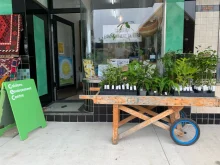
The Caldera Environment Centre Shop

We sell environmental themed books; locally indigenous plants; and plastic-avoidance-lifestyle household and personal care items.

We are a non profit volunteer organisation so overheads are low, your shopping with us pays the rent and insurance for us to have the Shop and Centre in town. 

The Caldera Environment Centre and Shop is at 43 Wollumbin Street, Murwillumbah, next to Fresh Whole Foods. 

View Page

Share

Fossil fuels won’t fix a fossil fuel crisis

Nicolette Boele

Today, these missed opportunities are doing more damage than ever. The biggest fossil fuel crisis in history has pushed us into a new reality, with the head of the International Energy Agency declaring the imminent death of the fossil fuel era: “The damage is done … This will have permanent consequences for the global energy markets for years to come.”

 https://www.thesaturdaypaper.com.au/share/a72b6f56-e28c-41d3-a446-a6f272e64179/TRFJ6xr

Share

CEC Annual General Meeting 


To all members of the Caldera Environment Centre.

Annual General Meeting 

13th October at 5:30 pm

Caldera Environment Centre and Shop

43 Wollumbin Street, Murwillumbah.

Please come along and support your local environment.

We need volunteers to support the CEC to continue our presence in Tweed Shire.

Please come along.

— 

Caldera Environment Centre

43 Wollumbin Street Murwillumbah

www: calderaenvironmentcentre.org

eMail: caldera@calderaenvironmentcentre.org

Share

The TSC Draft Growth Management, Housing and Employment Strategy (Draft GMHES)

CEC Highlighted for speed and ease of reading.

The ‘GMHE Strategy’ implements the NSW State planning policy the North Coast Regional Plan 2041, which requires Councils to “Identify and direct suitable land to accommodate planned growth” “to respond to higher than expected housing demand.” The GMHE Strategy identifies that land.

From the TSC draft GMHES:

“Current population 99,793, growing to 107,125–119,082 by 2041. Previous GMHES work identified a potential upper limit of 128,333.”

“Capacity to deliver approximately 27,400 new dwellings.” [!]

Hinterland villages to grow via boundary expansions (Burringbar, Tumbulgum, Tyalgum and Uki) and infill: (Chillingham, Crabbes Creek and Stokers Siding). read more

Share

The Tweed Rural Housing Issue

CEC Note Regarding the Rural Housing component of TSC’s ‘Draft GMHE Strategy’:

WRT Section D1.5.1, p.60. “Rural Housing.

“Secondary dwellings (granny flats) or dual occupancy (detached) … in the RU1 Primary Production and RU2 Rural Landscape zones. These can occur where:

  • “lots have a minimum lot size of 5 hectares.
  • “secondary dwellings have a maximum [floor] size of 60m2.
  • “the additional dwelling is located no more than 100 metres away from the principal dwelling.
  • “sharing a single property access point and driveway.”

We [CEC] object to the draft 5 hectares minimum lot size for eligibility for the secondary dwelling / dual occupancy.

Our [CEC] position is that such allowance should be only on land over 40 hectares.

———-

Background: The NSW Government’s ‘North Coast Regional Plan 2041’ requires Councils to “Identify and direct suitable land to accommodate planned growth” “to respond to higher than expected housing demand.” Tweed Shire Council have in response published for public comment the draft of their updated ‘Growth Management, Housing and Employment Strategy’, the GMHES, which identifies that land. read more

Share

The aim of the CEC

The following statement of our purpose is from our Constitution:

Caldera Environment Centre

Share

Submission: Low Rise Housing and Targeted Assessment Pathways

Summary:

The State is proposing another, whole new development pathway, called Targeted Assessments. This would be for virtually all other residential developments that still doesn’t fit the Complying Development criteria. 

The State’s cookie cutter building codes would again replace Tweeds building codes for these Targeted Assessments, and Tweed’s other planning and environmental controls would be weakened so much as to be virtually ineffective except in the most extreme cases.

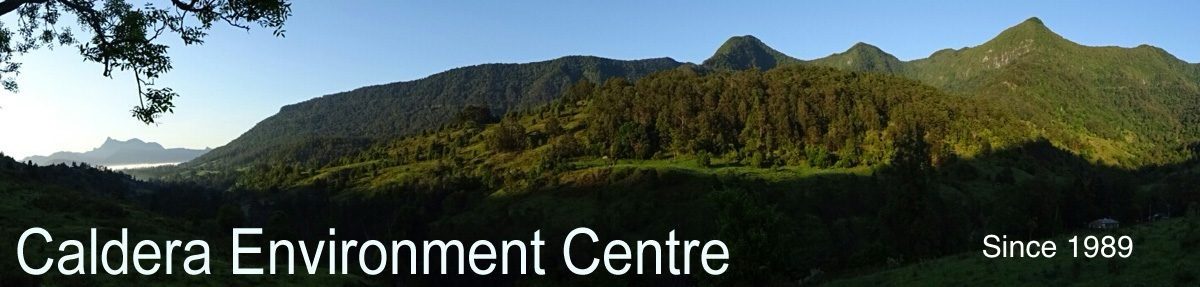
Tweed has the highest number of threatened species in Australia, is a fragile, steep, wet, active, erosion caldera, and has an urban population within the midst of this stunning ‘National Iconic Landscape’.  We have an obligation to protect this region in Australia’s public interest.  read more

Share

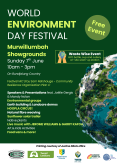
World Environment Day Festival 2026

Well done to all for the event, a turn-out of local community groups, all with the common interest of the local natural environment, its value, its preservation and its restoration.

Thank you all.

Share

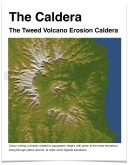
The Caldera – The Tweed Volcano Erosion Caldera

The Tweed Volcano: twenty million years ago, three million years of periodic volcanic eruptions.

Lava flows from volcanic eruptions over 3 million years left layer upon layer of lava, forming a ‘shield volcano’, a circular, dome shaped mound of layered lava, hardened into hard basalt rock, to a height of 800 meters above the current height of Mt Warning, covering the landscape to the south as far as Alstonville and past Kyogle to the west.

Oxygen and water have ‘chemically decomposed’ the hard basalt rock of the shield volcano into a soft, friable, fine, red colour, fertile clay soil.

Because of the the shape of the coastal landscape, and because of coastal current and weather patterns, and because of the the height and shape of the volcano, there is an unusually high localised rainfall over the volcano. read more
Share