Category: Caldera Nature

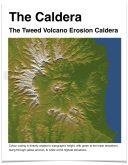
The Caldera – The Tweed Volcano Erosion Caldera

The Tweed Volcano was active about 20 million years ago.

Volcanic eruptions lasted about three million years. 

The shaped volcano basin has been hollowed out by the erosion effects of the landform induced, very high local rainfall.

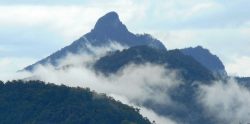
The central once molten hard rock core of the volcano is Mount Warning, aka Wollumbin.

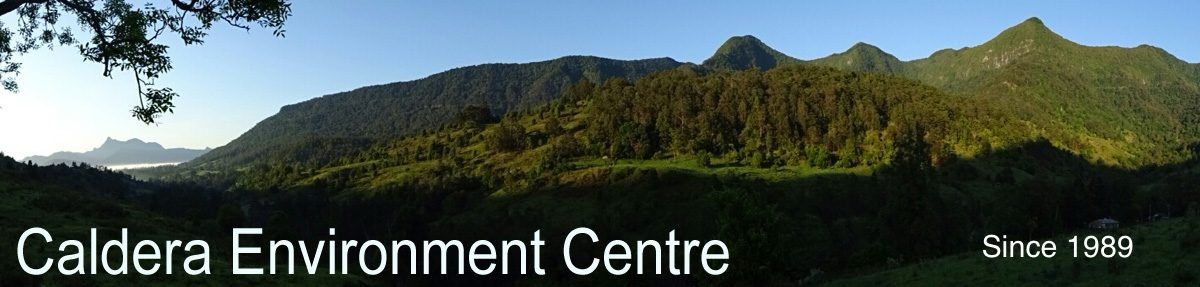
The volcano basin’s encompassing walls are exposed in the north, they are a high, vertical, hard-rock, …

This kind of geological formation is called an ‘extinct volcano erosional caldera’.

——————–

Australia was once at the south pole, there was no ice, it was so warm that there were crocodiles.

The mountainous entire eastern side of the continent was rainforest, inland Australia was a shallow warm sea. [Sea levels were higher because there was no ice.] read more

Share

The Tweed Valley: “A deep rich valley clothed with magnificent trees, … ” Oxley: 1823

In 1823 John Oxley was the first European to see the Tweed Valley, and he wrote of it: “A deep rich valley clothed with magnificent trees, the beautiful uniformity of which was only interrupted by the turns and windings of the river, which here and there appeared like small lakes. The background was Mt. Warning. The view was altogether beautiful beyond description. The scenery here exceeded anything I have previously seen in Australia.”

Oxley was sailing up the eastern coast of Australia from Sydney in search of a penal settlement site “for difficult convicts”. Sailing further, they decided on Redcliffe, part of now Brisbane (perhaps explaining something of the Queensland culture of today). read more

Share

The Tweed River District Official Tourist Guide, Murwillumbah – The Centre of Tourist’s Routes.

pdf – Scenic Beauties of the Tweed River District, Official Tourist Guide, Murwillumbah – The Centre of Tourist’s RoutesDownload

“The Upper Tweed affords scenes of beautiful fertile valleys, lofty mountains and hills, bold cliff and rugged bluff, all having rich and varied vegetation.

“… a great wealth of choicest timber trees, including Cedar (red and white), Teak, Beach, Baligum, Sasafras, Cudgera, Black and Redbean, Rosewood, Beefwood, a large variety of Fig trees, and numerous varieties of giant scrub trees, besides the various giant hardwoods in the forest areas.

“Of this wonderful scenic district, Murwillumbah, on the Tweed River, between a horseshoe range of mountain peaks and the sea, is an ideal centre for tourists.

“Destroyed by fire in 1907 it arose from its ashes, rebuilt in improved form – the centre of fertile converging valleys. read more

Share